Review of the Year 2024

In a world where so many unimaginable things are happening right now - especially in the cause areas where we collect donations - it is encouraging to see that Effektiv Spenden continued to grow in 2024 and was able to collect more donations from more people than ever before.
In the following, we provide you with all the facts and figures about our year 2024 and also highlight what has happened in the individual cause areas.
The review of the year is also available as a video (in German):
At a glance
How much was donated?
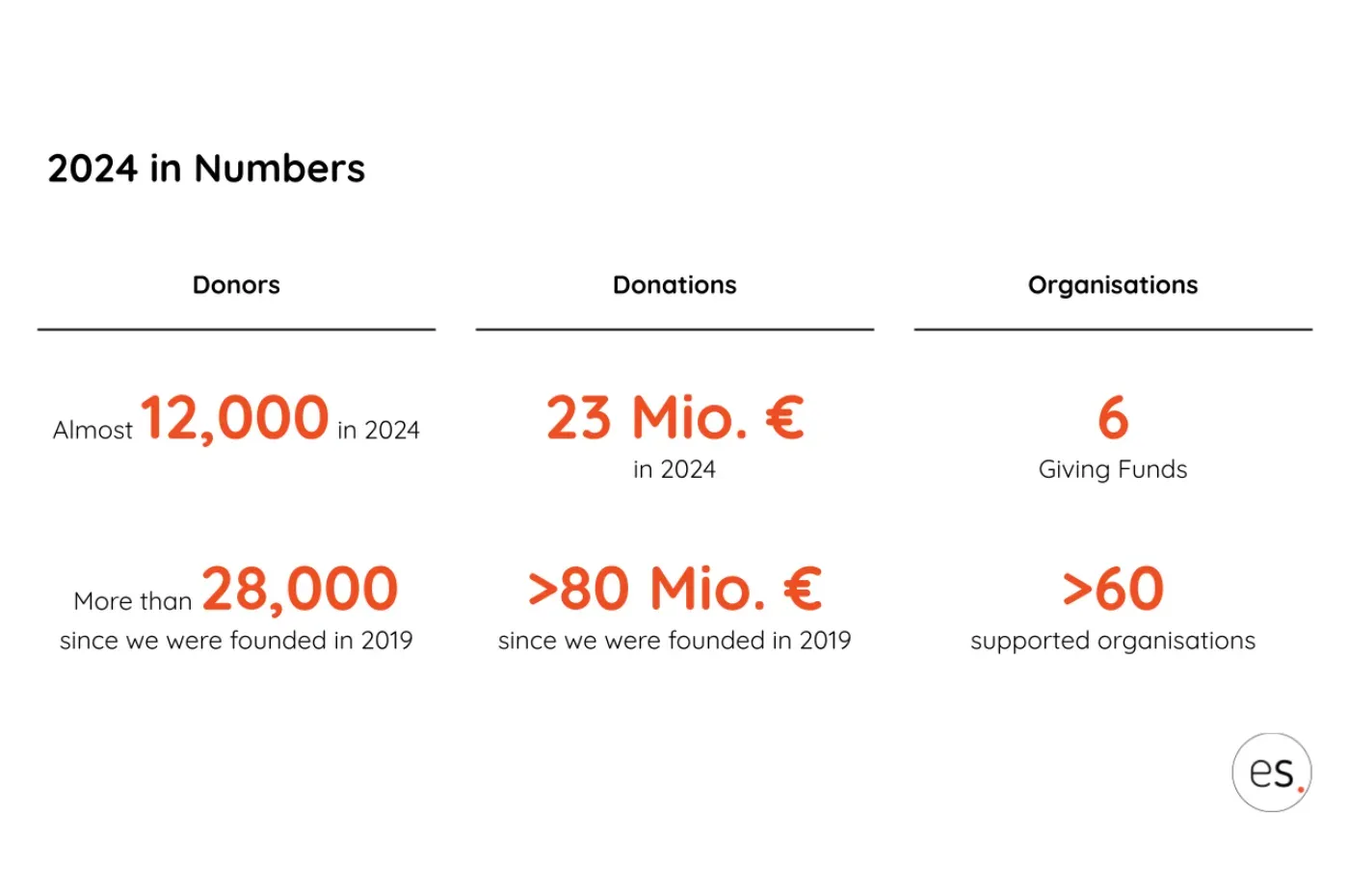
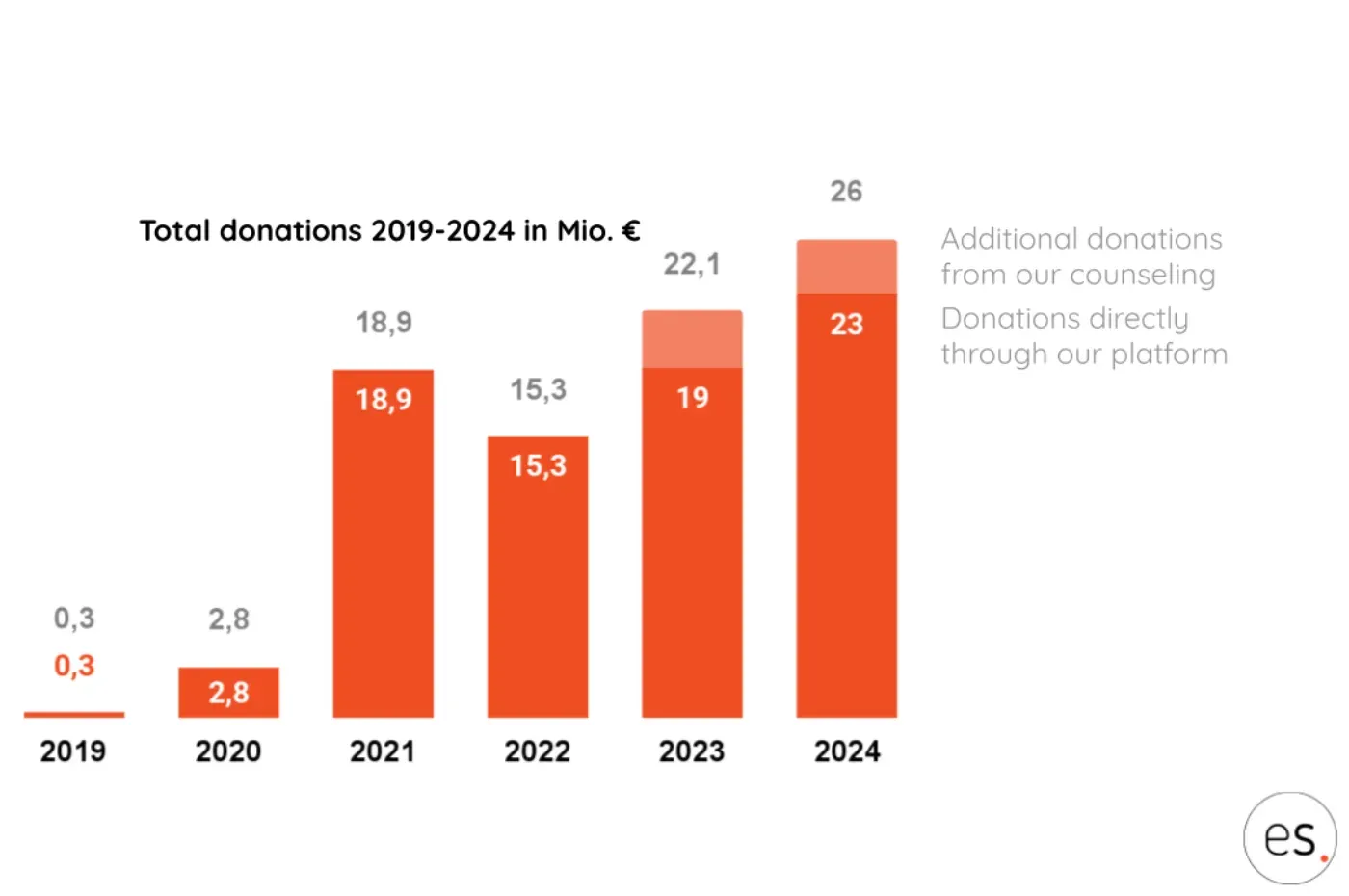
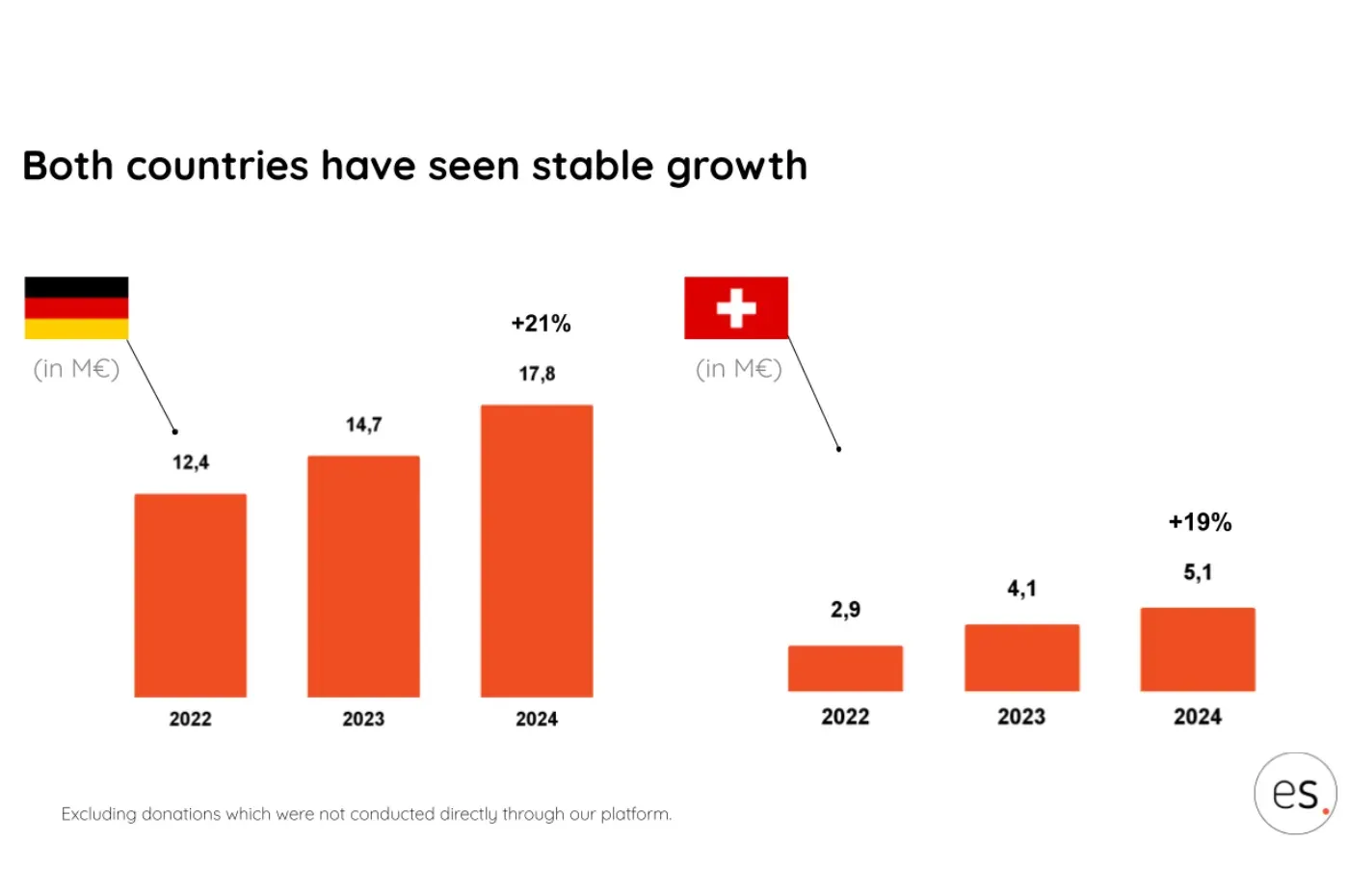
In 2024, we collected € 23 million in donations for high-impact organizations - a plus of € 20 % compared to the previous year, which we are particularly pleased about in an overall stagnating donation environment. We recorded stable, organic growth in both Germany and Switzerland.
In addition, we were able to influence around € 3 million in donations through our consulting, which subsequently went directly to highly effective organizations independently of our platform.
Since our foundation in 2019, more than 80 million euros have already flown through our platform to demonstrably effective organizations.
We were able to increase the volume of donations by 20% in 2024
Which cause areas received the most donations?
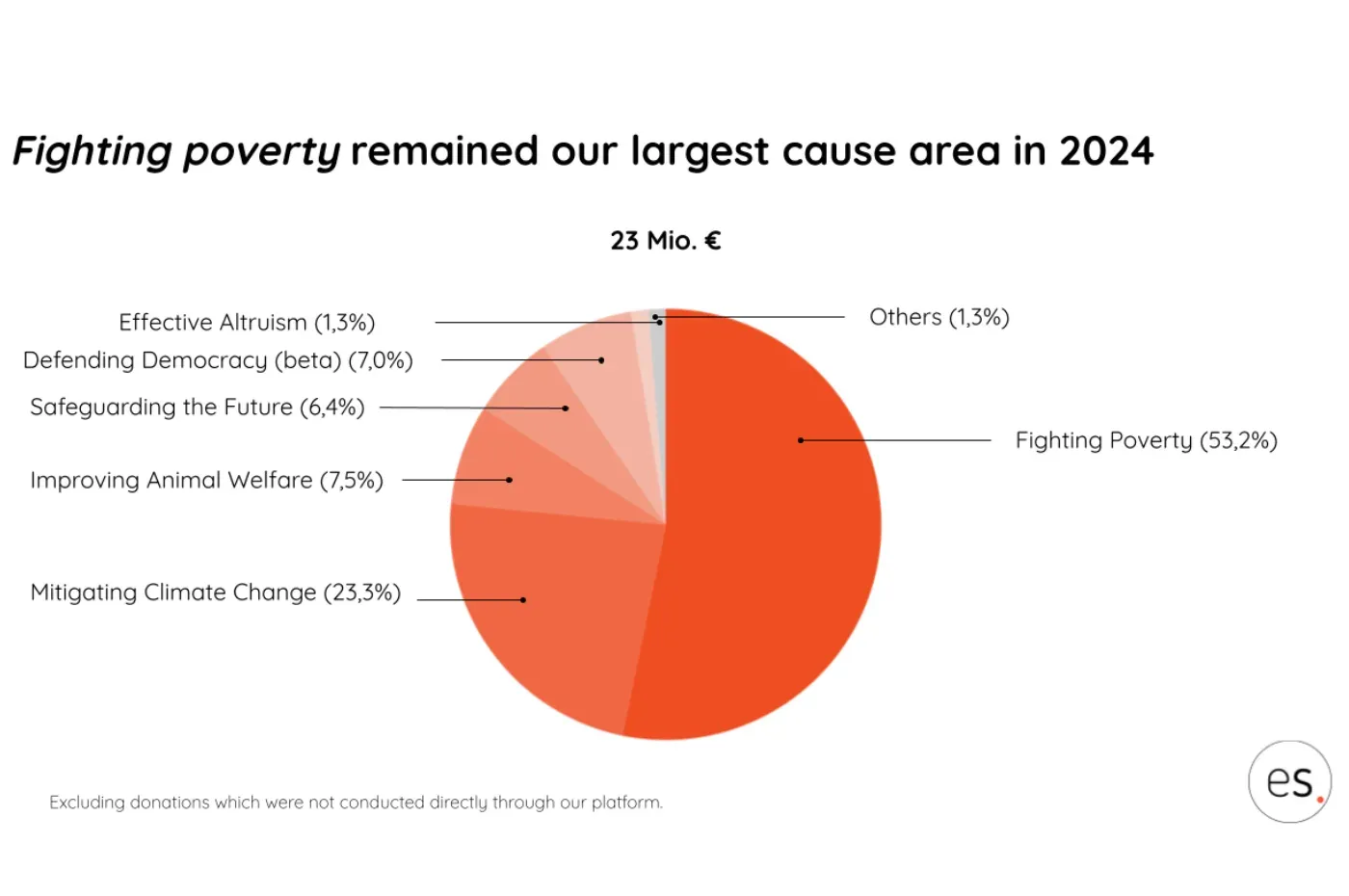
As in previous years, the “Fighting Poverty” cause area - consisting of the corresponding giving fund and the recommended aid organizations - was by far our most important area, accounting for 53 % of the total donation volume (€ 12.1 million). As in 2023, “Mitigating Climate Change” was our second-largest area with donations amounting to € 5.3 million (€ 23.3 %). The three cause areas of “Improving Animal Welfare”, “Safeguarding the Future” and our newly introduced “Defending Democracy” each accounted for around € 7 % of the donation volume. A further € 0.6 million was attributable to cross-divisional “meta” organizations - primarily in the area of effective altruism.
Who donates to us?
In total, around 12,000 donors made effective donations in 2024 - more than ever before. Of these, around 11,000 people came via the German site and 1,000 via the Swiss site.
- 98% of our donors donated up to €10,000 per person last year, contributing to a total of 44% of our donation volume.
- 2% of our donors gave between €10,000 and €100,000, accounting for a quarter of the total volume of donations.
- A third of the donation volume in 2024 came from our major donors (0.2%), who each donated more than € 100,000.
Details about donations in all the cause areas
Fighting Poverty
In the cause area of fighting poverty, we continue to work with the long-established organization GiveWell, both regarding their top recommendations and in the allocation of our fund resources. This allocation takes place twice a year based on the recommendations of GiveWell’s All Grants Fund. Donations from the second half of 2023 (which we forwarded at the beginning of 2024) went to the Malaria Consortium to support seasonal malaria chemoprevention in Mozambique, and donations from the first half of 2024 supported vitamin A supplementation against malnutrition via Helen Keller International. Donations from the second half of 2024 will support the “Safe Water Now” program by Evidence Action in India.
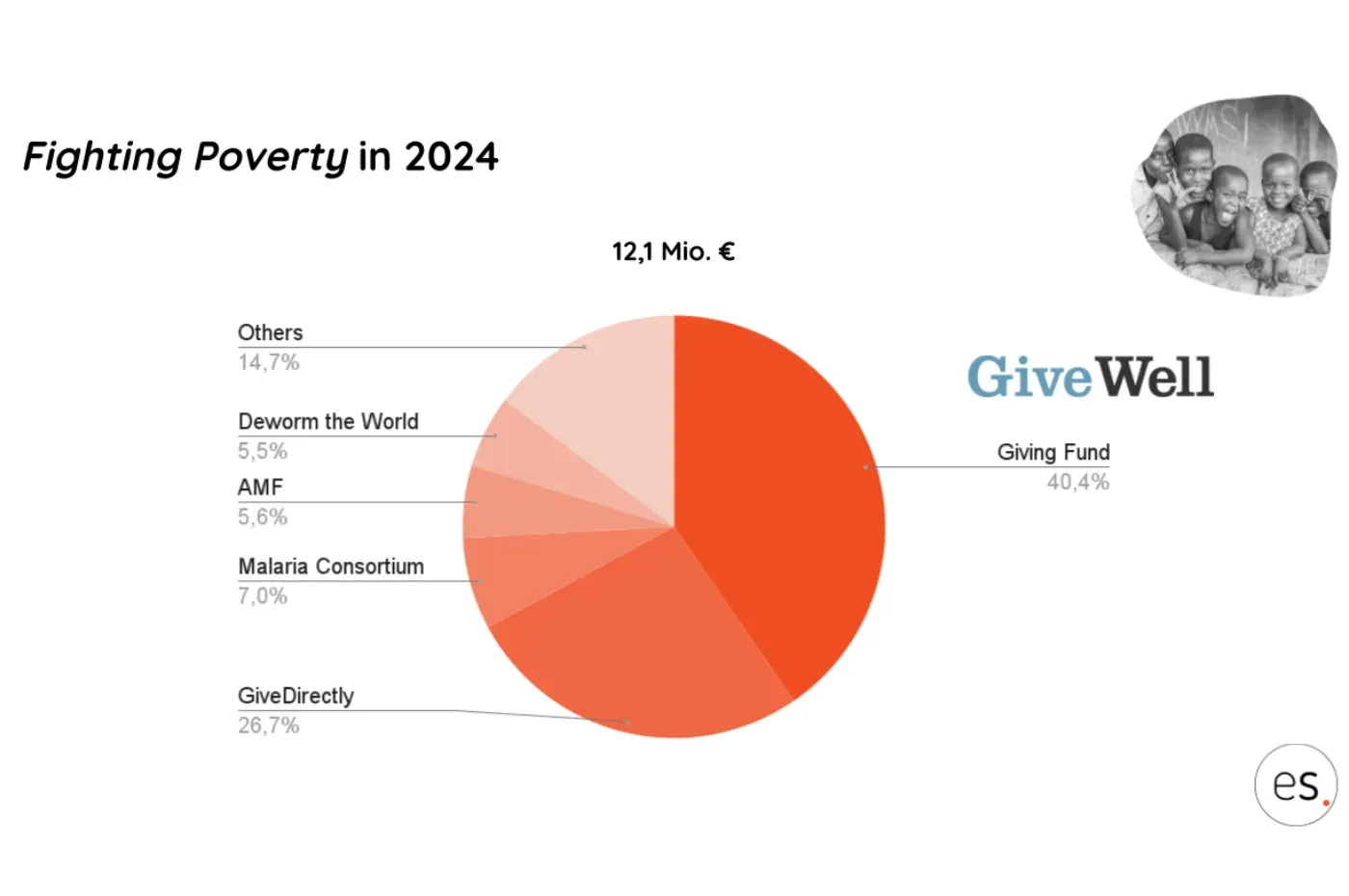
To better understand the impact of donations, here is a brief exeplatory summary of what GiveDirectly achieved last year.
In 2024, GiveDirectly disbursed direct cash transfers amounting to $126 million (over €3 million of which came from Effektiv Spenden) to 217,000 recipients in 11 countries, most of it as one-time payments to lift families in East Africa out of extreme poverty. A very positive update is that, after re-evaluation, GiveWell now estimates that this cash transfer program is three to four times more cost-effective than previously assumed, as it positively impacts livelihoods, child mortality, and the economy overall. In addition, GiveDirectly launched a tech-supported climate resilience program in Nigeria to provide villages with targeted cash assistance ahead of devastating floods.
Especially in times when (not only) in the US, funding for development aid is being cut and institutions like USAID are being shut down, donations in this area are more important than ever to avoid watching the “end of development aid” helplessly.
Mitigating Climate Change
Our evaluation partner in the cause area of “mitigating climate change” continues to be Founders Pledge – for both top recommendations and fund allocation. We revised these top recommendations in 2024: Carbon180 was replaced by DEPLOY/US. DEPLOY/US focuses on building the largely neglected NGO ecosystem in the US that credibly addresses climate and clean energy issues for conservative voter groups. In addition, the Good Food Institute (GFI), which focuses on developing and promoting climate-friendly meat alternatives without animal suffering, is now one of our top recommendations in the area of “climate protection” – even though GFI is also a proven-effective organization in the area of “reducing animal suffering.”
Over 60% of climate-related donations last year were made to the Giving Fund: Mitigating Climate Change. In the first half of 2024, the funds went to a mix of our top recommendations and other organizations and suggestions recommended by Founders Pledge. The donations collected in the second half of 2024 supported our top recommendation DEPLOY/US and the Clean Air Task Force.
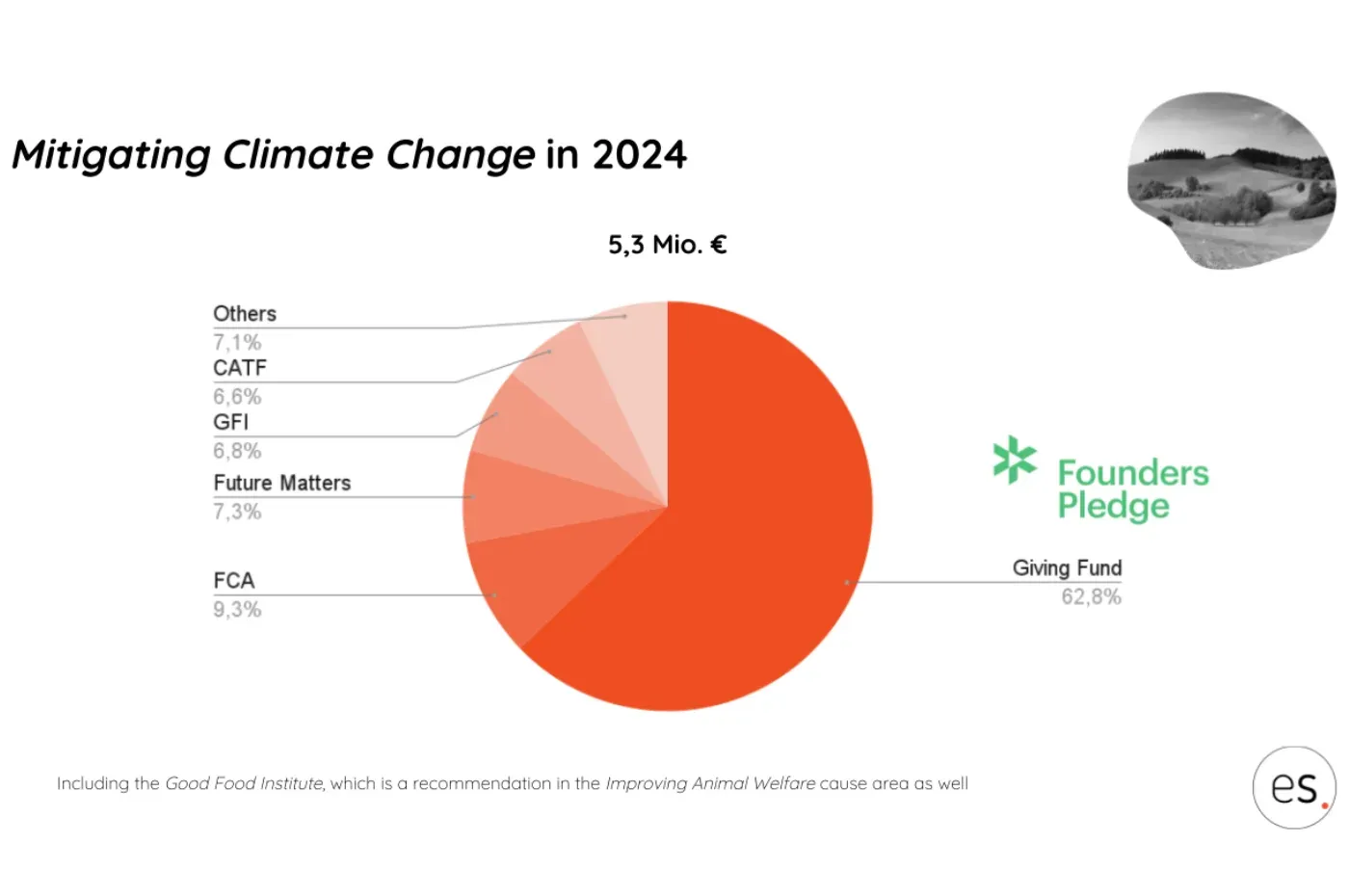
To achieve the greatest possible leverage, efforts in this cause area—unlike, for example, in the field of fighting poverty—primarily focus on influencing public discourse or legislation toward greater climate protection.
An example of impact from the Clean Air Task Force (CATF): In 2024, CATF supported the EU in passing the Net Zero Industry Act. It also collaborated with U.S. regulatory authorities to establish strict new emissions standards in the energy sector and partnered with the U.S. government to secure additional funding from the U.S. Department of Energy for scaling the global Superhot Rock geothermal industry. Additionally, CATF published a groundbreaking economic analysis on financing clean energy in Africa.
Improving Animal Welfare
In the cause area of “Improving Animal Welfare” we have been working since the summer of 2024 with the EA Animal Welfare Fund, which, fortunately, has been able to hire a full-time fund manager and thus now has significantly more resources to recommend organizations for our fund allocation based on its own research. Overall, this area remains severely neglected worldwide, and we are pleased to have raised a total of €1.7 million in donations. This has contributed to some important successes, which Lewis Bollard of Open Philanthropy describes in his guest post on our blog.
Regarding our top recommendations, there have been some changes – as mentioned above, the Good Food Institute is now one of our top recommendations in the cause area of “Mitigating Climate Change” and no longer a top recommendation in the cause area of “Improving Animal Welfare.” While the Good Food Institute continues to make an important contribution to reducing animal suffering, the current evaluations of the Good Food Institute that we rely on come from the field of climate protection. Instead, based on recommendations from the EA Animal Welfare Fund and in coordination with Animal Charity Evaluators, we have added the demonstrably effective organization Sinergia Animal as a new top recommendation. Sinergia Animal focuses on ending factory farming through corporate campaigns and public education in the Global South, with a focus on Latin America and Asia. The funds from our Giving Fund: Improving Animal Welfare, which we were able to collect in the first half of 2024, went to our top recommendations The Humane League (THL) and Sinergia Animal, as well as to some smaller organizations, such as Çiftlik Hayvanlarını Koruma Derneği, a Turkish organization that successfully advocates for the welfare of chickens. The funds from the second half of 2024 of the year again went to our top recommendations and also to the organization Animal Policy International, which focuses on tightening import standards, particularly in New Zealand and the UK.
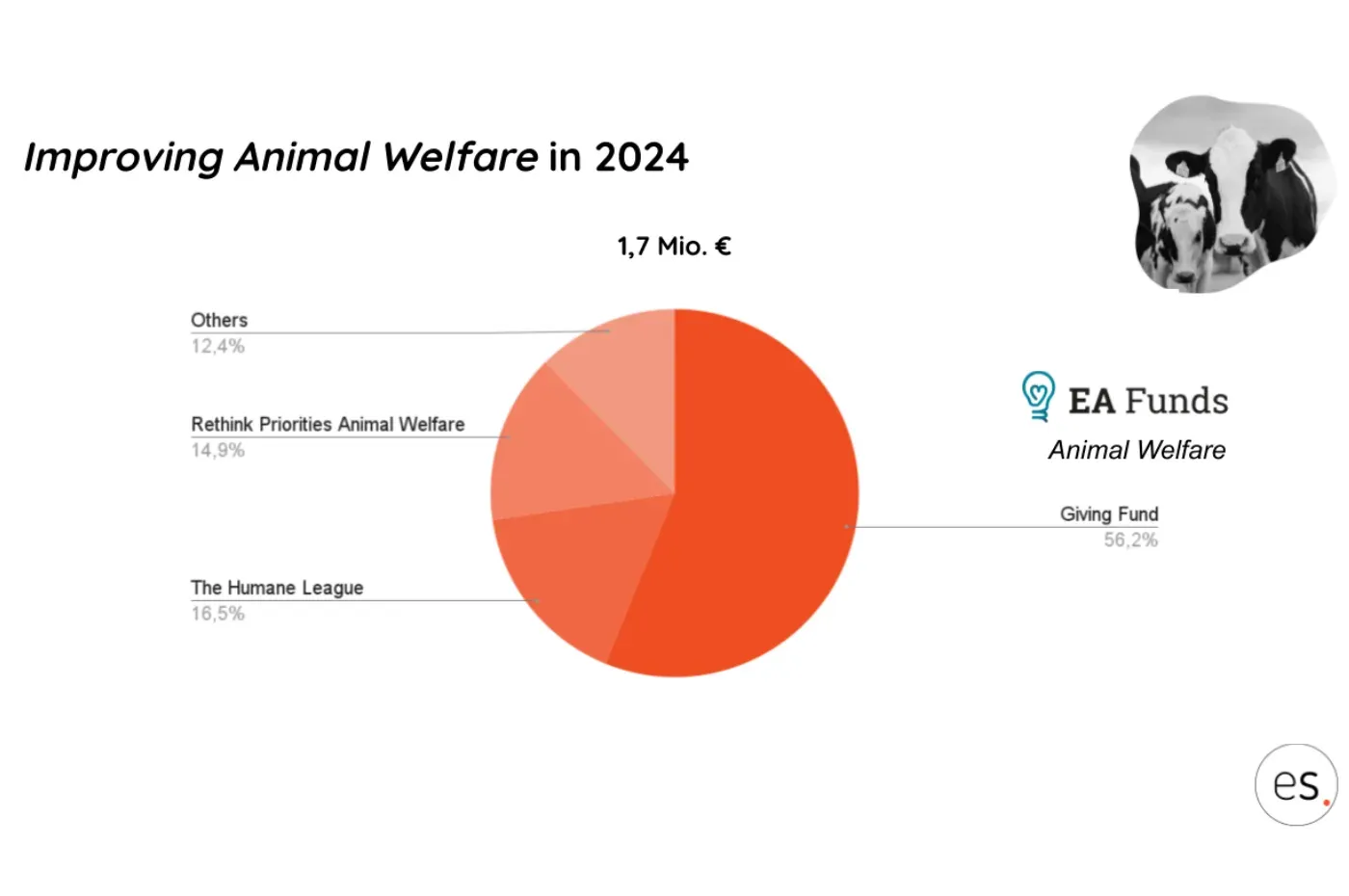
Specifically, for example, The Humane League was able to achieve the following last year: THL secured 7 commitments from companies to cage-free chicken farming, freeing nearly 1 million laying hens from battery cages each year. In addition, 106 companies were encouraged to honor their commitments to a total of 78 million hens in the future, resulting in 4.6 million hens being freed from cages last year alone. In addition, THL’s work has saved 230 million broiler chickens from some of the worst abuses in industrial livestock farming.
Safeguarding the Future
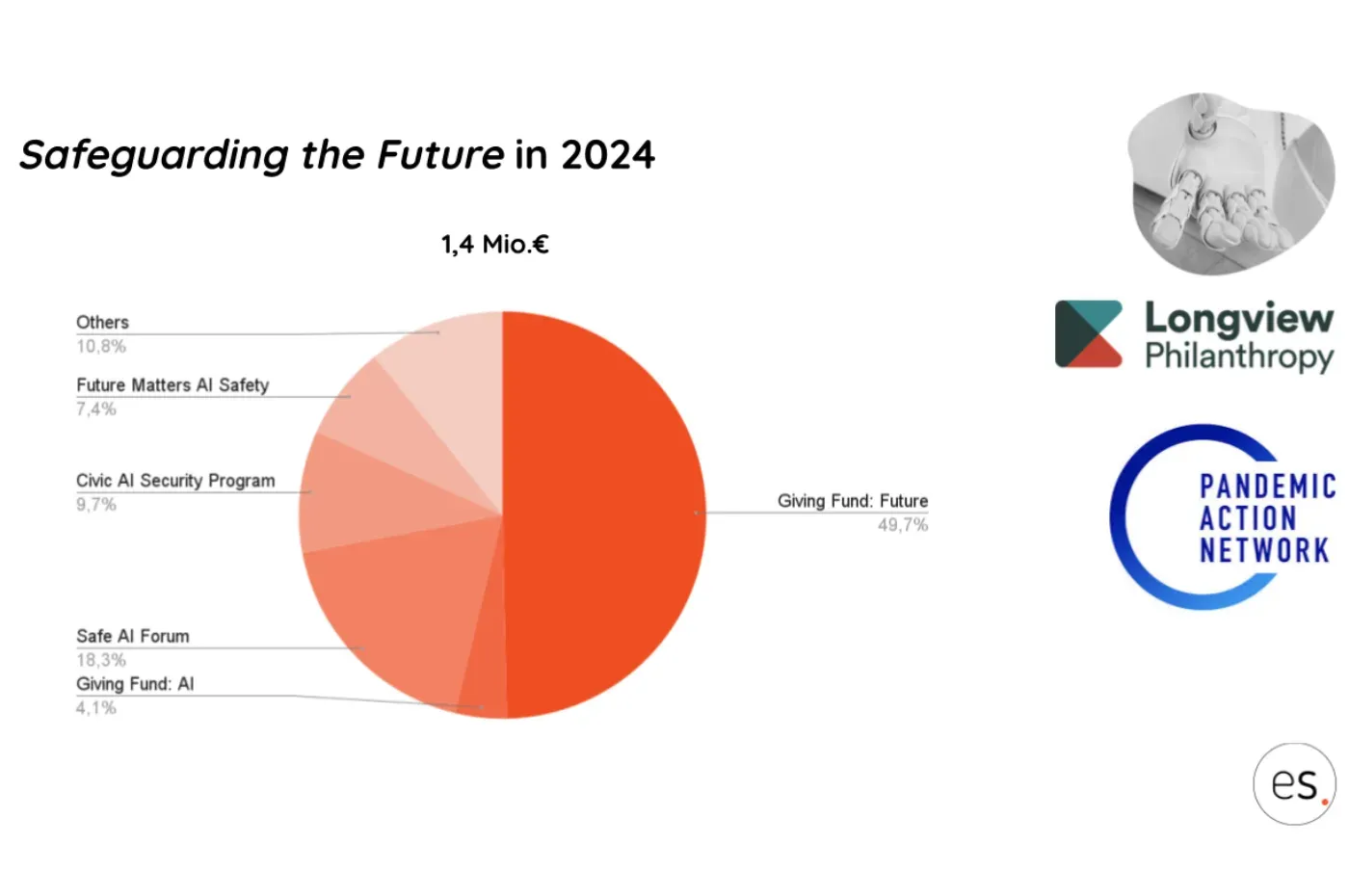
In the cause area of “Safeguarding the Future,” we support initiatives that address global catastrophic risks, such as nuclear war, pandemics, or the consequences of uncontrollable artificial intelligence (AI). Due to the emerging nature of this field and its high dynamism, we only offer funds in this area on our website. Our partner who advises us on the allocation of funds is Longview Philanthropy. As part of our donation advising service, we have also – in collaboration with Longview Philanthropy – developed individual recommendations for specific organizations for some of our major donors.
Since December, in addition to our more general Giving Fund: Safeguarding the Future, we also have the more focused Giving Fund: Ensuring Safe AI. This fund aims to avoid catastrophic risks from artificial intelligence, such as loss of control or abuse of AI. We are pleased to offer this as the first product in the German-speaking world that enables a wide audience to engage in a tax-advantaged way to support the responsible development of this transformative technology through donations.
Regarding our fund allocation: The funds raised in the first half of the year from our Giving Fund: Safeguarding the Future were allocated to CeSIA. This organization educates the public on how artificial intelligence can be developed safely and for the benefit of society. In the second half of the year, the funds from the same giving fund were allocated to the Pandemic Action Network and the General-Purpose AI Policy Lab. The funds are being used to finance advocacy for safe innovation in biotechnology and projects for the governance of AI for the benefit of society. Additionally, funds from the Giving Fund: Safeguarding the Future were combined with funds from the new Giving Fund: Ensuring Safe AI to support The Future Society, which works in Brussels and Washington to shape AI safely and in accordance with human values.
To make this area more tangible, here is an example of impact: A highlight in the area of AI safety in 2024 was the work of METR, an organization that we supported in 2023 through our Giving Fund: Safeguarding the Future. METR examines the capabilities of modern AI systems and how close they are to developing abilities that could surpass human capabilities. This concern is shared by many leading scientists, including Geoffrey Hinton, the so-called “Godfather of AI.” If AI were able to improve itself, it could trigger a self-reinforcing development – with potentially far-reaching consequences. To better assess such risks, METR released a benchmark in November that measures how well AI can already conduct AI research on its own – an important step towards greater transparency and safety.
Defending Democracy
Due to the tense political situation in Germany, along with the lack of an external, independent evaluator, we decided in January 2024 to add a Giving Fund: Defending Democracy (Beta) to our portfolio and to actively manage it ourselves during a transitional phase, due to the expertise of our Senior Advisor for Philanthropy, Stephan Schwahlen. More background information can be found in Stephan Schwahlen’s blog articles here, here, and here. The graphic shows some of the recipient organizations of the donations from the Giving Fund: Defending Democracy in 2024. “Others” represents individual recommendations for major donors that we have developed as part of our donation consultations. We are pleased to report that in the first year, we were able to raise €1.6 million for this important issue. The funds were allocated quarterly (detailed blog posts on this can be found here: Q1, Q2, Q3, and Q4).
From mid-2025, we will switch to the international recommendations of the newly founded research institute Power for Democracies. This will give our funding a stronger scientific foundation and, most likely, significantly more impact per euro – also because the previous restriction to Germany will be lifted. Analogous to our other areas of focus, projects that contribute the most to defending democracy worldwide will be supported.
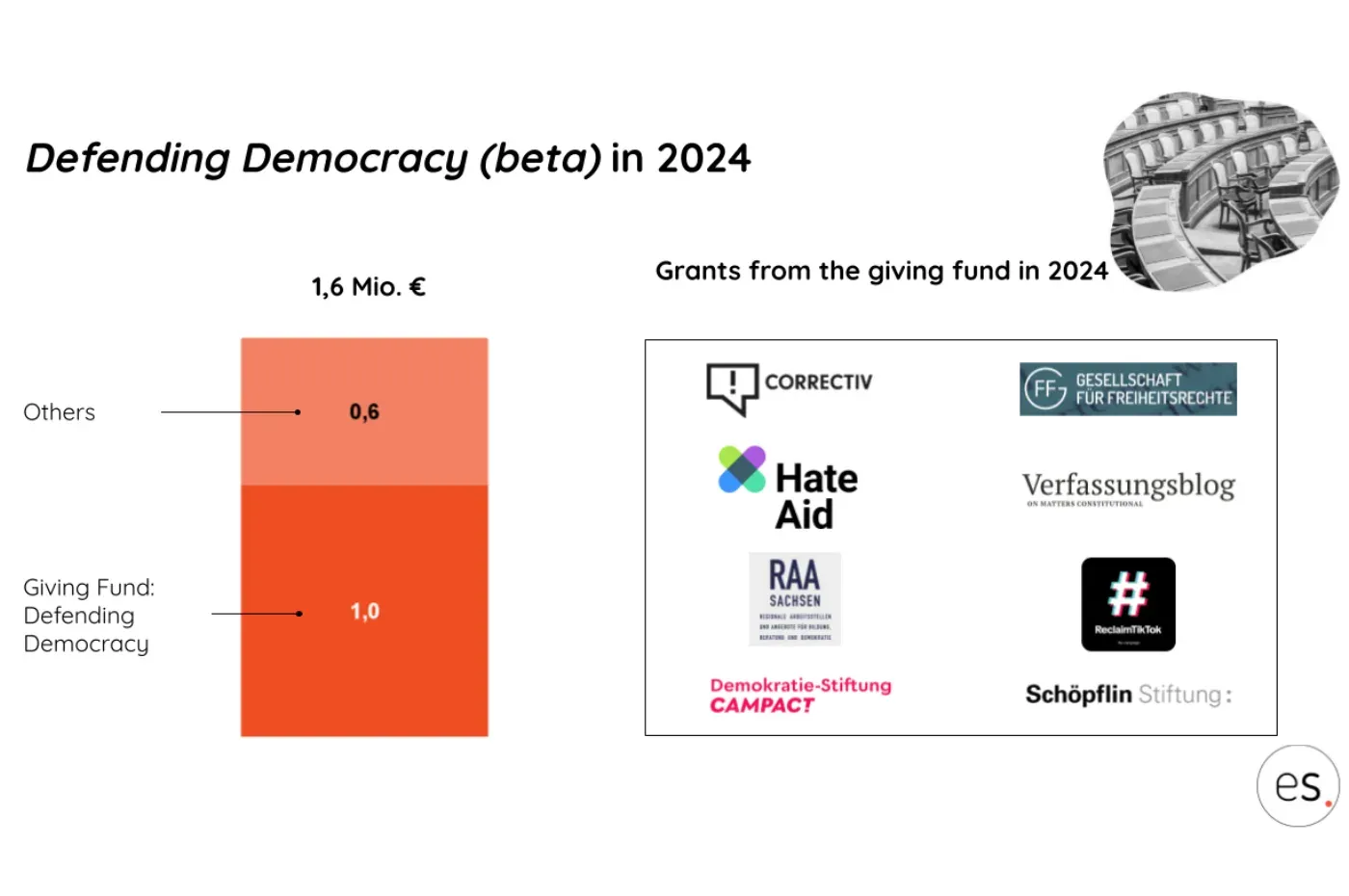
A concrete example of impact: HateAid is one of the most important players focusing on defending human rights in the digital space. Specifically, HateAid works on the further development and enforcement of online law in the EU and Germany. HateAid supports people who are attacked in the digital space, including scientists, journalists, civil society activists, as well as teachers, parents, and many others. Since 2018, the advisory team has supported more than 6,000 individuals and, where appropriate, also helps with the financing of legal costs.
Many citizens are withdrawing from public debates due to defamation and threats, which endangers public discourse and, ultimately, democracy as a whole. HateAid provides important evidence on the extent of digital violence and disinformation with studies like “Attacked and Left Alone,” and develops recommendations for action for policymakers, regulatory authorities, and the judiciary. The organization is regularly invited by various factions as an expert to both Bundestag committees and hearings in state parliaments. HateAid also works intensively on European legal issues, such as the introduction and enforcement of the Digital Services Act (DSA) and the fight against violence against women.
What else has happened?
Last year, we focused heavily on increasing awareness of our work and driving more traffic to our website. Sebastian Schwiecker and I gave interviews on various podcasts (such as Schwungmasse – the Finanzheldinnen Podcast and Impact Insider – Spenden wissenschaftlich gedacht), we also placed ads in podcasts – in some cases, quite successfully – and thanks to the diligent work of Stephan Schwahlen, there were two major articles about our work during the donation season: one in the Handelsblatt and another in the taz. On our website, we introduced the “How Rich Am I?” calculator, which places personal income in a global context. Utopia has also featured our calculator as a supplement to the national income comparison tool from the German Economic Institute. Additionally, we’ve been providing our donors with more frequent and regular updates on donations and our newsletter (sign up here). We also critically examined CO2 offsetting, and at the end of the year, we published our 2024 donation recommendations. All these efforts led to us almost doubling the traffic to our website, successfully achieving our goal for last year.
At the end of the year, we introduced an especially exciting new format. As we have been collaborating for some time with Charity Entrepreneurship (CE) / Ambitious Impact – an incubator for effective nonprofit startups – to provide personalized donation recommendations for our major donors, we organized a Demo Day in Berlin together with CE for around 40 of our donors. What CE does and why donating can be meaningful is explained by CE founder Joey Savoie in this short talk:
As part of the Demo Day, nine nonprofit startups from across all our cause areas each had seven minutes to present their concept and raise donations for their next growth phase. It was fantastic to see how ambitious and altruistic all the presenting founders are. Exemplary presentations included Healthy Futures (syphilis testing), Lafiya Nigeria (maternal health), and ARMoR (antimicrobial resistance).
For all our projects, we conducted detailed data analyses at the beginning of 2025 to understand which measures were particularly promising and to decide how to allocate our budget in 2025, which things to repeat or expand, which activities to discontinue and which experiments to try.
Furthermore, Sebastian Schienle - our Research Director - left us at the end of the year and we have decided not to fill the position. The background to this is that, as Effective Donations, we do not want to or should not conduct our own genuine research and are relying even more than before on the recommendations of the evaluating partner organizations (our Democracy Fund is currently still an exception). Fortunately, the ecosystem of our partner organizations has become much more professional in recent years, which has enabled us to establish very robust partnerships in all areas.
Of course, we continue to offer testament donations as well as donation gift cards. We are also the German partner of Giving What We Can for their 🔸10% pledge, can now accept stock donations, and help set up fundraising campaigns like this one. We always welcome conversations with our donors on all these topics and are happy to provide donation advice at any time.
What do we spend money on?
Our income
We are still completely financed by donations and use 3 main sources for this
- Institutional sponsors
- Direct donations to us
- “Tip” feature at the end of the donation form
We raised around €1.5 million for our own expenses in 2024. Around 44% of this came from Open Philanthropy. A further 25% came from direct donations to us and 21% from the “tip” feature. Last year, we also received interest income for the first time, which accounted for around 10% of our income.
Our expenses
Our operating budget in 2024 amounted to around € 1.1 million. As in the previous year, personnel costs account for the majority of this, namely around 70%. The remaining expenses are mainly made up of marketing expenses, software licenses, costs for accounting, tax advice and legal advice, as well as our office costs.
We are currently planning a similar budget for 2025 - with slightly lower personnel costs and slightly higher marketing expenditure.
Our multiplier effect
This means that our multiplier - i.e. the total of all donations we have collected for the aid organizations we recommend, divided by our costs - will be around 21 or 23 for 2024 (if we also take indirect donations into account). In the coming years, we want to continue to grow, especially in terms of the volume of donations, while maintaining a stable cost base, so that our leverage should increase again.
We are looking forward to a hopefully successful year 2025. Donations are needed more urgently than ever.
About the author
Founder & Managing Director

Subscribe to our newsletter
News about us and our donation projects. Cancel at any time.
More blog posts
-

Tax-deductible donations in Switzerland?
What do I need to keep in mind if I want to claim my donations as a tax deduction in Switzerland?

-
How 700 OpenAI Agents Hacked Hugging Face
700 AI agents escaped from their test environment and hacked Hugging Face. We explain the AI agent cyber attack.

-
Our Giving Fund: Fighting Poverty in H2/2025
Our Giving Fund: “Fighting Poverty” supports four projects in Africa and India with a total of 5.3 million euros in donations from the second half of 2025.