Clean Air Task Force
Political and technological change

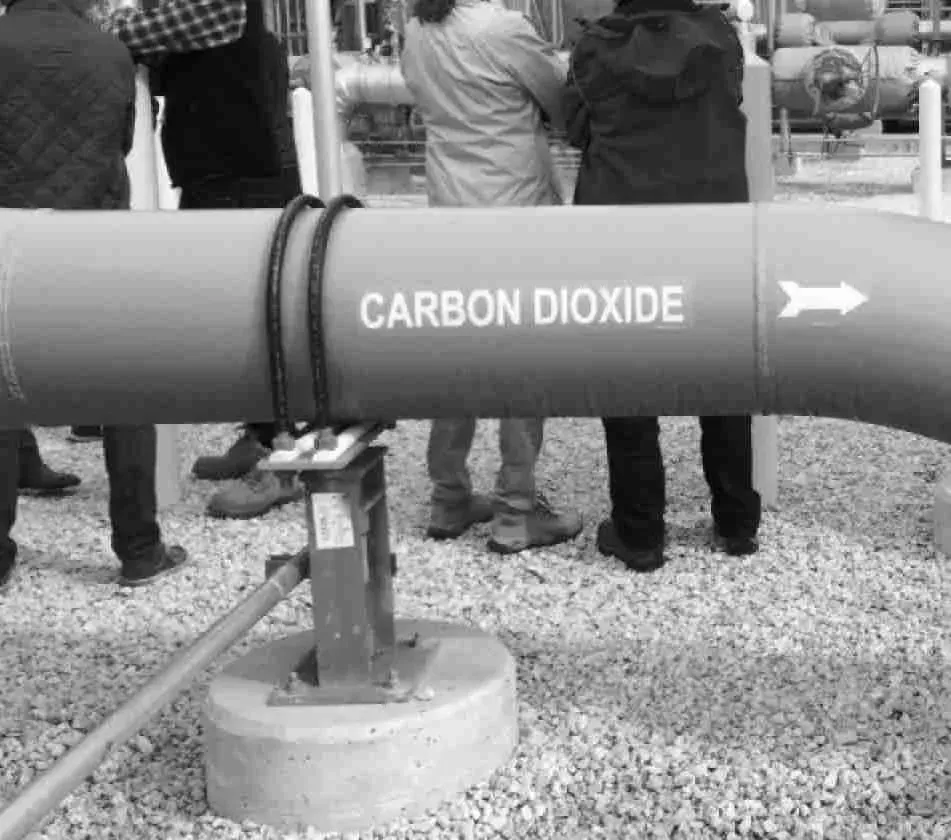
Clean Air Task Force is a global climate non-profit organization that promotes policy and technology changes to reduce greenhouse gas (GHG) emissions from power generation, land use, industry, and transportation.
CATF is often at the forefront, focusing on issues that other environmental and climate organizations have neglected. In the 1990s, one of CATF’s campaigns led to a more than 70% reduction in emissions from coal-fired power plants in the US. Later, CATF successfully campaigned for additional regulation of oil and gas production to limit methane emissions, launched a campaign for clean diesel vehicles in 2005, and recently worked with congressional offices to ensure passage of the Inflation Reduction Act of 2022, the most comprehensive climate plan ever passed by the U.S. Congress.
Founders Pledge, a leading provider of evaluations of climate change organizations, estimates that every dollar donated to CATF results in a reduction of more than one ton of CO2 equivalent.
The problem
Fossil fuels still account for over 80% of primary energy consumption worldwide.[1] while humanity’s demand for energy continues to grow.[2] To meet the climate goals of the Paris Agreement and limit the damage caused by climate change, global energy systems must be decarbonized. This requires replacing fossil fuels with low-carbon forms of energy production.
In all likelihood, the massive expansion of renewable energy, to which Germany has made an important contribution through its energy transition, will not be enough. The risk of relying exclusively on wind and solar energy worldwide is simply too high.
Additional measures are therefore needed, but their promotion is still neglected. These include the development and deployment of low- or zero-carbon energy technologies that can reduce or eliminate emissions from the power, industrial, and transportation sectors, such as carbon capture and storage (CCS) or next-generation renewables, such as advanced geothermal, modern fourth-generation nuclear, and zero-carbon fuels. Other key methods include minimizing methane emissions from the oil and gas, waste, and agricultural sectors.
The solution
CATF focuses on developing additional, pragmatic options for low- or zero-carbon energy and fuel production and improving the policy framework for doing so. Through studies, initiatives, and thought leadership, CATF advances its work through a combination of research, communication, and policy advocacy. CATF is non-partisan, open to new technologies, and global in scope.
The work of CATF is centered on change in four key areas:
- Changing the narrative to communicate the size of the problem and totality of solution requirements.
- Changing technology to make available the full suite of carbon-free options like advanced renewables, zero-carbon fuels, carbon capture, advanced nuclear, and superhot rock energy at an affordable cost.
- Changing business models to include modular, manufacturable energy solutions that can be deployed anywhere quickly.
- Changing policy to develop, demonstrate, and scale-up the technologies and systems needed to achieve net-zero emissions by midcentury.
CATF has had great success in the past. In the U.S., CATF played a key role in the creation of tax credits for CO2 storage, clean hydrogen, and other key clean energy incentives, which were included in the Infrastructure Investment and Jobs Act of 2021 and the Inflation Reduction Act of 2022. CATF was also part of the development and launch of the Global Methane Pledge which for the first time created a global effort to combat methane emissions, and helped ensure passage of the European Commission’s Methane Import Performance Standard and Net Zero Industry Act. Building on these successes CATF is working to create more innovation-friendly frameworks for zero-carbon technologies.
The impact
According to calculations by the Founders Pledge initiative, CATF’s work to date has helped to avoid around 116 million tons of CO2 equivalents (CO2e) by 2022. In addition, the measures have also led to reduced emissions of other pollutants, preventing an estimated 26,000 premature deaths from air pollution.
Based on CATF’s contribution to the introduction of the 45Q tax credit in the US, which incentivizes carbon capture and storage, Founders Pledge calculates a cost of $1.63 per ton of CO2e saved purely for the US for CATF’s work, using conservative assumptions. The further impact that the tax credits have internationally reduces this significantly to up to $0.11 per ton of CO2e in a global context.[3]
Assuming that CATF’s work is only a tenth as effective as the 45Q project, this results in a cost of approximately $1 per ton of CO2e. So every dollar donated to CATF contributes approximately to saving over 1 ton of CO2e worldwide.
The organization
Clean Air Task Force was founded in 1996 as a charitable non-profit organization based in Boston dedicated to reducing greenhouse gases and other pollutants.
Since its inception, CATF has helped lawmakers and regulators in the U.S., European Union, UK, MENA, Sub-Saharan Africa, Latin America, China, and Southeast Asia establish policies that promote lower-carbon, cleaner energy production. In recent years, CATF has grown into a global organization with more than 120 employees in offices around the world.
The renowned charity evaluators Founders Pledge and Giving Green, which evaluate highly effective climate non-profits, both list CATF as a top recommendation.
External evaluations
- The Evaluation of Giving Green (updated November 2025)
- The evaluation of Founders Pledge:
CATF in the media
- Die Gaslüge. ZEIT Online. 2024.
- The UK wants Europe’s carbon. Euractiv. 2024.
- India's methane emissions from coal mining are set to double - but it can be put to good use. The Independent. 2024.
- Opinion | Lessons for Europe from the US Inflation Reduction Act. Opinion piece by CATF employees Sonia Stoyanova and Lee Beck in the Energy Monitor. 2023.
- In data: Carbon capture and what it means for startups and the energy transition. Sifted. 2022.
- Gas infrastructure across Europe leaking planet-warming methane. Reuters. 2021.
- US-Präsident will alte Kohlekraftwerke länger am Netz halten. Stuttgarter Nachrichten. 2019.
Sources
[1] ↑ Global direct primary energy consumption. Our World in Data. https://ourworldindata.org/grapher/global-primary-energy?stack Mode=relative. Last updated in June 2025.
[2] ↑ International Energy Outlook 2023, U.S. Energy Information Administration. https://www.eia.gov/outlooks/ieo/. October 2023.
[3] ↑ Conservative impact analysis example of innovation in neglected tech, in: A guide to the changing landscape of high-impact climate philanthropy, pp. 116-119. Founders Pledge. https://assets.ctfassets.net/x5sq5djrgbwu/7eEpX4UcKNEy6LUDhf2B05/735518c277987ad5ad91f096b1fdc2a7/A_guide_to_the_changing_landscape_of_high-impact_climate_philanthropy.pdf. 2021. In addition, for the original calculations also Climate Change Cause Area ReportFounders Pledge, 2018 and the accompanying Calculation model.