Fund update: Defending Democracy (H1/2026)

The Democratic Party has won the US midterm elections with a historic result. That people could vote freely was not a given: nonprofits defended it in court. In Serbia, Brazil and Venezuela, too, recent months have shown that democracy can fight back.
In this update you can read what that means for our work – and where the roughly EUR 425,000 that 1,690 donors entrusted to our donation fund: Defending Democracy in the first half of 2026 is going.
At a glance
Topics
- USA: The blue wave
- Bright spots: Serbia, Brazil, Venezuela
- Germany: What now?
- Artificial intelligence and democracy
Funded projects
From the first half of 2026: EUR 425,000
- 🌍 EUR 149,000: Starting budget for the first recommendations on AI
- 🇦🇷 EUR 46,000: Centro de Estudios Legales y Sociales (CELS), Argentina
- 🇹🇷 EUR 40,000: Turkey Litigation Support Project (TLSP), Turkey
- 🇮🇩 EUR 190,000: Lembaga Kajian dan Advokasi Independensi Peradilan (LeIP), Indonesia (under review)
USA: The blue wave, an enormous encouragement
The US midterm elections brought the Democratic Party a victory that was historic in many respects. The media have followed it, and continue to follow it, very closely. For a concise assessment, we recommend this video, well worth watching, by Anne Applebaum, the renowned historian and journalist who received the Peace Prize of the German Book Trade in 2024.
The Democrats’ victory is mainly explained as a reckoning with the economic and social consequences of the government’s policies. But it depended on people being able to vote freely at all – which could no longer be taken for granted in this election:
- The Justice Department tried to build an illegal national voter database.
- Armed federal agents checked people’s eligibility to vote at their front doors.
- Poll workers were threatened with prosecution.
Organisations such as Protect Democracy, the ACLU and Common Cause went to court against this – and won. A few days before the election, federal judges stopped both the door-to-door checks and the threats against poll workers.
In Alaska, the Justice Department, on the president’s instructions, tried to prevent in advance the certification of the Senate result should incumbent Dan Sullivan lose to the Democrat Mary Peltola. A federal court dismissed the suit on 1 November. Before that, the election authorities as well as Common Cause and the League of Women Voters, represented by the ACLU, had asked for it to be dismissed.
The work of these organisations, named here as examples, did not begin in the election year but years earlier, funded largely by committed private donors and foundations.
Further successes of militant democracy in practice
Strong democratic actors, an active civil society, robust institutions
In our last fund update we described the global trend towards autocracy in detail, but we could also point to bright spots, such as the change of government in Hungary that many had not expected.
In recent months there have been bright spots beyond the USA, too. Several important examples showed that the negative trend of the last 25 years need not become a self-fulfilling prophecy of decline, as long as pro-democratic societies use their power to shape events actively and consistently, even under difficult conditions.
Stanford political scientist Larry Diamond goes so far as to ask in the Journal of Democracy whether 25 October 2026 in particular might one day be seen as the beginning of the end of the global “democratic recession”. We think that is too optimistic, but the way these events coincided is remarkable:
Serbia: Protests that made it to the ballot box
On 25 October, the Student List won the snap parliamentary election with 52.7 percent and an absolute majority of 141 of the 250 seats (overview). Aleksandar Vučić, whose party had governed in an increasingly autocratic way since 2012, conceded defeat on election night. Turnout was around 70 percent, the highest since 1992. The victory was carried by two years of protest after the canopy collapse in Novi Sad that killed 16 people; many smaller opposition parties withdrew in favour of the list.
Brazil: The institutions hold
On the same day, Lula da Silva won the run-off against Flávio Bolsonaro by 51.8 to 48.2 percent (overview). His father, Jair Bolsonaro, had been sentenced to 27 years in prison in 2025 for an attempted coup; Flávio had announced an amnesty for those involved in it. After the first round he was still two points ahead. In the run-off, Lula then won more than ten million more votes than in the first round, thanks in part to a huge last-minute mobilisation on social media: a WhatsApp channel run by his camp grew to eleven million followers in a short time. Flávio Bolsonaro demanded that the election be annulled, but key institutions such as the Supreme Court have already recognised it.
Venezuela: The opposition leader is back
Also on 25 October, Nobel Peace Prize laureate María Corina Machado returned to Venezuela from exile; according to her party, she had previously been prevented from returning at least seven times. Since August, Venezuela’s transitional government and the opposition have both committed to presidential elections, but there is no date; in September, US President Trump still called elections premature. Machado disagrees: only a democratically legitimate government can bring stability.
Germany: The situation has changed. What now?
The election results in Saxony-Anhalt and Mecklenburg-Western Pomerania have shocked and shaken up many people. On the one hand, Germany, ranked 15th in the “Liberal Democracy Index” of the 179 countries the V-Dem Institute assessed in 2026 (see p. 48), still belongs to the leading group of full democracies. And autocratisation is further advanced in other large European countries such as Italy (37th), or threatens, as in the case of France (9th), to gain a major boost in 2027.
On the other hand, the negative trend in Germany carries particular weight, because an increasingly anti-democratic, ethno-nationalist, protectionist Germany would make it extremely difficult to achieve the aims and values of the EU for the EU as a whole.
So we are very glad that our research partner Power for Democracies is planning to develop specific donation recommendations for Europe’s large liberal democracies in 2027 – Germany included!
Artificial intelligence and the global threats to democracy
The next challenge
Artificial intelligence is advancing so quickly that the established methods of risk assessment, risk management and government regulation face enormous challenges. Recent incidents show this, such as the escape known as the Hugging Face event, in which an autonomous swarm of 700 AI agents broke out of a (supposedly) secure OpenAI test environment and then broke into the important tech website Hugging Face and stole from it. Or the growing use of AI-generated deepfakes by criminals, as in the case of the EUR 95 million obtained by fraud from a subsidiary of the major Italian bank Intesa Sanpaolo.
From democracy’s point of view, the threat posed by AI is many-layered and powerful, but AI also opens up new opportunities to develop democracy, our “operating system”, further. Above all, this issue knows no national borders. As with other critical tech issues such as social media, both the threats and the possible countermeasures are largely global phenomena – which makes them urgent and important for almost every country, Germany included.
To be able to make donation recommendations in this critical field as quickly as possible, Power for Democracies has, as a first step, developed a map called the “AI Democracy Landscape” to survey the current state of knowledge (the tool and its taxonomy are aimed mainly at researchers; we are linking to it anyway).
We look forward to receiving donation recommendations on this topic, probably as early as the first half of 2027.
The organisations we fund
In the first half of 2026, donors in Germany and Switzerland gave EUR 425,000 to our Defending Democracy fund. How that money is used has now been decided or is in final review.
The money from the second half of 2025 has now reached the recipient organisations in full and is being put to work; at the time of our last report, EUR 448,000 from the German fund was still under review.
Here are the new funding decisions, sorted by topic or country and by organisation:
AI as a global topic: Starting budget for the first recommendations in 2027 (EUR 149,000)
As explained above, this topic is exceptionally important and urgent. So we have set aside EUR 149,000 from the first half of 2026 to give the organisations that Power for Democracies will assess in the coming months a particular incentive to support the review process quickly.
Argentina: Centro de Estudios Legales y Sociales (CELS, EUR 46,000)
We introduced CELS in our update on the second half of 2025. While the first grant of EUR 158,000 from 2025 is already being put to work on the ground, it was recently agreed to support the same programme with a further EUR 46,000 from the first half of 2026.
An example of CELS’s current work: on 12 March 2025, pensioners protested in front of Congress in Buenos Aires against their low pensions. Photojournalist Pablo Grillo was hit in the head by a tear gas canister fired by the security forces and was in danger of losing his life for months. CELS represents him as joint plaintiff together with the Argentine human rights league LADH.
The police officer to whom the shot is attributed will soon stand trial; CELS accuses him of attempted murder. In September 2026, the responsible federal judge summoned another police officer who was present when the shot was fired. According to CELS, he named the two superiors who directly led the operation; they are due to be questioned in November. This brings closer the question of who in the chain of command and at the political level is responsible for the violent crackdown on the protest.
The case shows how CELS defends the freedom to protest and press freedom through legal means.
Note: The grant to CELS comes from our Swiss fund.
Turkey: Turkey Litigation Support Project (TLSP, EUR 106,000)
TLSP is Power for Democracies’ new second recommendation for Turkey (see here and here). From the money raised in the second half of 2025, the Common Good Fund Germany has already allocated and paid out EUR 66,000; a further EUR 40,000 will follow shortly.
For two decades, Turkey has been moving towards a closed autocracy. The government uses broadly worded anti-terror laws to prosecute opposition politicians, journalists, human rights defenders and lawyers. It does not implement rulings of the European Court of Human Rights (ECtHR), such as those ordering the release of Osman Kavala and Selahattin Demirtaş. In May 2026, an appeals court in Ankara removed Özgür Özel, the elected leader of the largest opposition party, the CHP.
The Turkey Human Rights Litigation Support Project (TLSP) was founded in 2018 by international human rights lawyers at Middlesex University in the UK, in response to the emergency measures after the 2016 coup attempt. TLSP supports strategic, precedent-setting cases before the ECtHR, the Committee of Ministers of the Council of Europe and UN treaty bodies. According to Power for Democracies, TLSP fills a role that no other organisation currently fills in Turkey – at daily rates below those of comparable international teams.
As a rule, TLSP does not represent clients itself. Instead it strengthens Turkish lawyers through third-party interventions, legal opinions and advice. Between June 2023 and May 2025 it supported at least 35 affected people and 15 lawyers and contributed to 14 strategic cases and 6 third-party interventions. In leading judgments such as Kavala and Demirtaş, the ECtHR expressly relied on TLSP interventions. TLSP submissions helped lead the Committee of Ministers to open rare infringement proceedings against Turkey in the Kavala case. In January 2026, after an intervention coordinated by TLSP, the president and ten board members of the Istanbul Bar Association were acquitted of charges of terrorist propaganda.
By May 2027, TLSP aims to support at least ten strategic cases and five third-party interventions – so far it has always exceeded its commitments. Your support helps keep up the international legal pressure on the Turkish government.
Note: The decision to fund TLSP is made by the Common Good Fund Germany, using money from our German fund. CGFG’s funding is limited to activities that serve charitable purposes as defined by the German Fiscal Code. These include, for example, research and legal analysis, advice and exchange formats for lawyers and human rights defenders, and public education.
Indonesia
Indonesia – with around 280 million people the fourth most populous country in the world – was long regarded as Southeast Asia’s model democracy. According to V-Dem, the country has slid into electoral autocracy since 2010, and the decline continues under President Prabowo Subianto (in office since 2024).
In the Reporters Without Borders World Press Freedom Index, Indonesia fell from 111th to 127th place within one year. After protests in August and September 2025, around 3,000 people were arrested and ten died.
In January 2026, a new criminal code (KUHP) and a new code of criminal procedure (KUHAP) came into force. Both contain problematic provisions, such as penalties for insulting the president, prison for organisers of unregistered demonstrations, and loopholes that encourage police entrapment and corruption.
Institute for Criminal Justice Reform (ICJR, EUR 382,000)
ICJR is a more recent recommendation from Power for Democracies (see here and here). From the money raised in the second half of 2025, the Common Good Fund Germany has allocated and paid out EUR 382,000.
The Institute for Criminal Justice Reform (ICJR), founded in 2007, is an independent research institute working for human-rights-based criminal law reform. Since 2015 it has coordinated the National Alliance for Criminal Law Reform with 41 member organisations, which puts it at the centre of Indonesian civil society on criminal law. Among other things, the alliance secured a ten-year probation period for death sentences and limited the offence of treason to physical acts. In 2023–2024, the government brought in ICJR as a technical adviser on implementing the criminal code.
The initiative comes in at the stage when practice and precedents are being formed. ICJR trains partner organisations and is setting up monitoring of the new criminal code in three regions, based on publicly available, human-rights-based interpretation guidelines. At the same time, ICJR is investigating whether the new code of criminal procedure allows police entrapment during preliminary investigations. Depending on what it finds, ICJR will pursue cases before the Constitutional Court or targeted legislative changes.
Power for Democracies put the unmet funding need for 2026–2028 at around EUR 500,000; a good part of it has now been covered by the fund. Your support helps make sure the new criminal laws do not become a tool against criticism and protest.
Note: The decision to fund ICJR is made by the Common Good Fund Germany, using money from our German fund. CGFG’s funding is limited to activities that serve charitable purposes as defined by the German Fiscal Code. These include, for example, research and monitoring, preparing publicly available commentaries on legislation, training for civil society organisations, and public education.
Lembaga Kajian dan Advokasi Independensi Peradilan (LeIP, EUR 190,000 – under review)
LeIP is a Power for Democracies recommendation in its final review. From the money raised in the first half of 2026, the Common Good Fund Germany is currently setting aside EUR 190,000, subject to a positive final assessment.
In Indonesia, the courts are among the few institutions that have so far set limits on authoritarian overreach – but their independence is coming under growing pressure. In 2023, the Constitutional Court cleared the way to the vice presidency for the son of then-President Joko Widodo, even though he did not meet the constitutional minimum age – the ruling was later censured as an ethics violation. Bribery scandals reach all the way to the Supreme Court: in 2024, a judge of that court was sentenced to ten years in prison for bribery and money laundering.
The Lembaga Kajian dan Advokasi Independensi Peradilan (LeIP) grew out of the “Clean Judiciary” campaign in 1999, after Indonesia’s democratic transition. For more than 25 years it has strengthened judicial independence through research, advocacy, training and trial monitoring.
Its track record is exceptional: around 90 percent of its draft went into the 2004 law establishing the Judicial Commission. The law on the anti-corruption courts, which LeIP helped draft, was passed in 2009 with only minor changes. LeIP supported the Supreme Court with its reform plan and the introduction of a chamber system, and the judiciary adopted its human rights training modules for judges. According to Power for Democracies, LeIP is one of the few civil society organisations trusted by both the Supreme Court and the Ministry of Law.
With the grant, LeIP plans to train judges on freedom of expression and prepare them for its next focus topic, the rights of Indigenous peoples. LeIP will also research and analyse court decisions and coordinate exchange within the network of civil society organisations working for an independent judiciary.
The organisation had reported a funding need of EUR 190,000 for 2027, which has now been covered. Your support strengthens courts that protect civil rights even under political pressure.
Note: The decision to fund LeIP is made by the Common Good Fund Germany, using money from our German fund. CGFG’s funding is limited to activities that serve charitable purposes as defined by the German Fiscal Code. These include, for example, training for judges, research on court decisions and networking among civil society organisations.
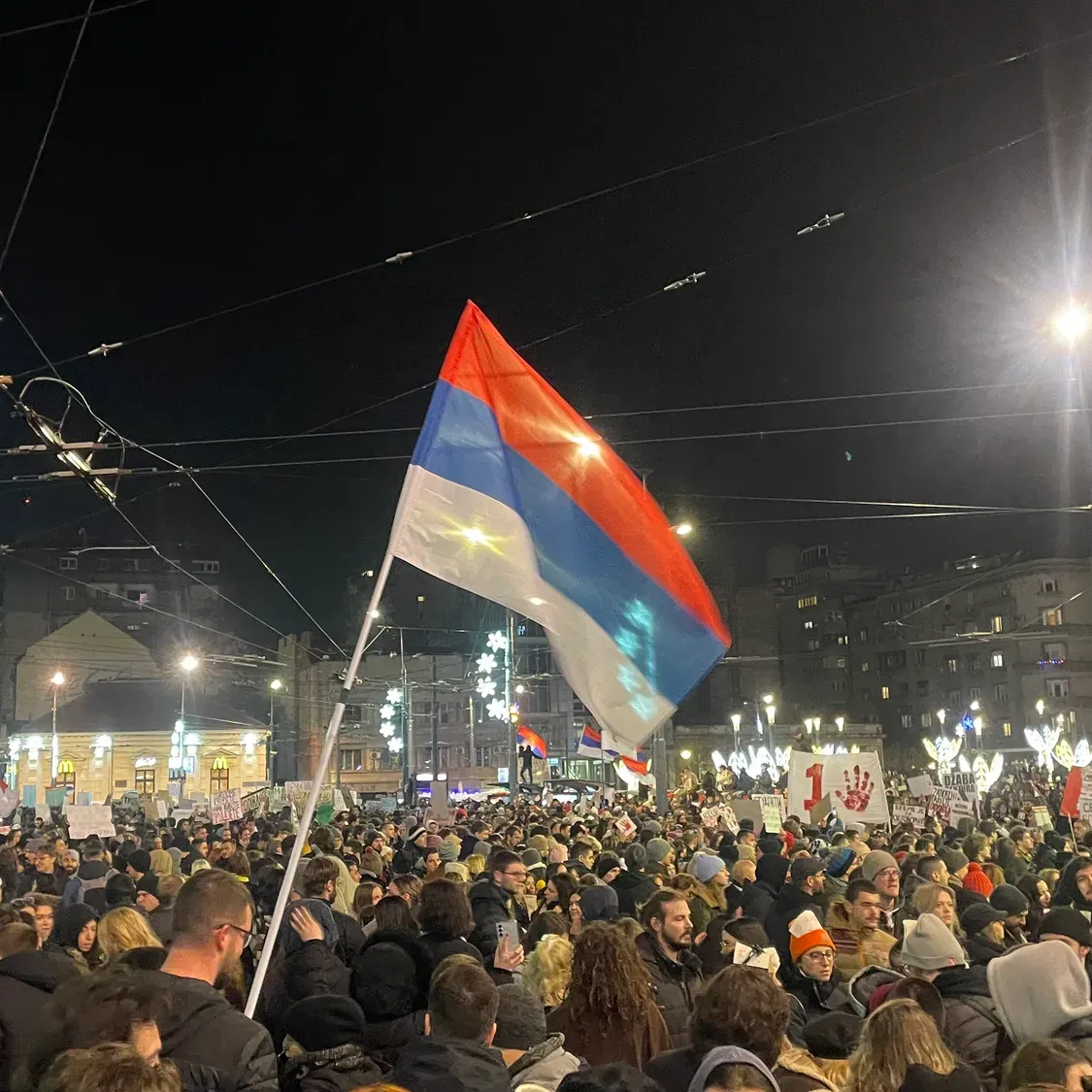
Header image: Student protest on Slavija Square in Belgrade, 22 December 2024. Photo: Stefan Miljuš / VOA, public domain.
About the author
Senior Advisor Donor Advisory

Get our newsletter
We share tips and news on how you can improve the world effectively.
15,675 people already read it.
The form could not load, probably because of an ad or script blocker. Turn it off for this page or write to us at info@effektiv-spenden.org.
More blog posts
- Donation tips
The Zewo seal of approval: what it checks and what it doesn’t – a critique
About two thirds of donations in Switzerland go to Zewo-certified charities. What the seal checks, what it doesn’t – and how to find effective organizations.
- Tax & ways to give
Tax-deductible donations in Switzerland?
What do I need to keep in mind if I want to claim my donations as a tax deduction in Switzerland?
- Future & AI
How 700 OpenAI Agents Hacked Hugging Face
700 AI agents escaped from their test environment and hacked Hugging Face. We explain the AI agent cyber attack.