GiveDirectly
Direct cash transfers for extremely poor people

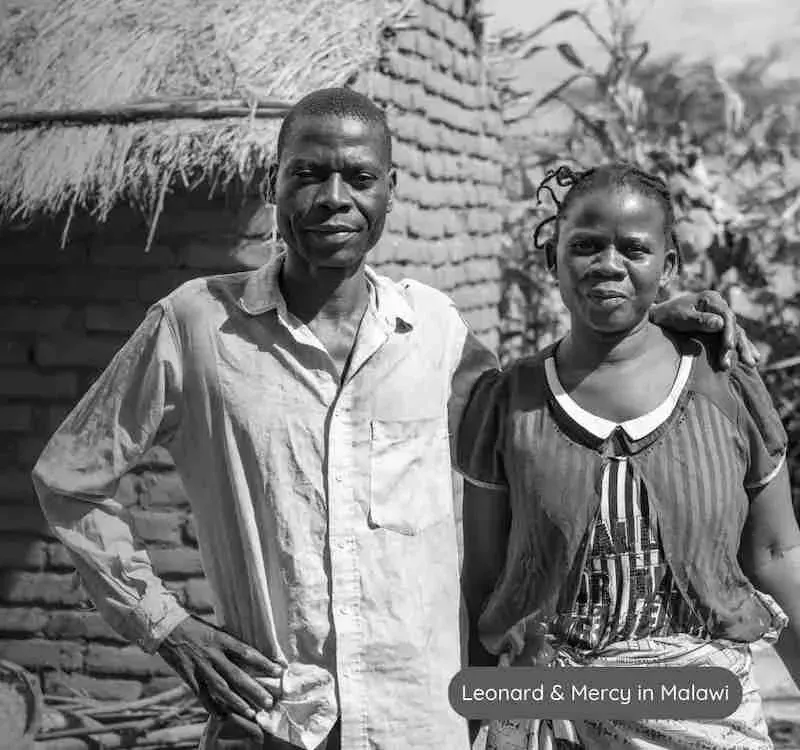
GiveDirectly transfers money by cell phone to people living in extreme poverty. There are no strings attached to these money transfers and the recipients do not have to pay the money back.
Families can use it to buy much-needed food and medicine, pay school fees, or start small businesses. A large body of research shows that unconditional cash transfers reliably and sustainably help people overcome extreme poverty, unlike most conventional aid interventions.
The problem
832 million people live in extreme poverty, i.e. they have to get by on less than $3 per day. That is 10% of the world’s population. Although around 1.5 billion people have escaped extreme poverty since 1990, this trend has been reversed since the Covid-19 pandemic. The organization Our World in Data assumes that the number of people living in extreme poverty will rise to 932 million by 2040.[1]
Caroline Teti, Vice President for Human Centered Design and Advocacy at GiveDirectly, describes very impressively in this video how this can be reflected in the everyday lives of those affected.
However, many traditional approaches to development cooperation (formerly development aid) are not sufficiently focused on the real needs of these people. Development programs are often driven more by political considerations (in both donor and recipient countries) than by the question of how to most effectively help people with the resources available. Traditional development cooperation is also often costly because it employs a large number of staff from donor countries who are paid relatively high salaries.
The solution
So why not just cut out the big aid apparatus and give money directly to people in extreme poverty? No one knows the needs of poor people better than they do.
Thanks to unconditional cash transfers, people can decide for themselves what is best for their lives. GiveDirectly transfers the equivalent of an annual income to people living in extreme poverty. In Kenya, this corresponds to around $1,000 for a five-person household.
These money transfers are extremely efficient: Of the donations made to GiveDirectly’s programs, more than 87% is delivered directly to the world’s poorest people, with the rest covering delivery costs (staff, bank fees, etc.). Because the money is transferred to people’s cell phones via mobile banking, it is virtually free from corruption. In addition, this approach is highly scalable and could theoretically be transferred to many other countries with little effort.
The impact
Cash transfers have been in use in many countries for around two decades and are now considered one of the best evaluated approaches in development cooperation. An evaluation of 165 studies shows that cash transfers are surprisingly reliable and lead to sustainable improvements in a variety of areas (including education, health, savings rate).[2] In humanitarian aid, cash transfers can increase food security and are more cost-effective than in-kind contributions.[3]
However, it was often feared that the recipients would spend the money on alcohol, drugs and the like. However, studies have repeatedly shown that this is not the case.[4] The World Bank also sees targeted cash transfers as an effective means of combating poverty and inequality.[5]
The positive results are also reflected in the evaluation of GiveDirectly’s work. The gold standard of scientific research, a randomized controlled trial, showed that GiveDirectly’s program in Kenya not only had a positive impact on the financial situation of participants, but also increased the psychological well-being of payees.[6]
There is also evidence of so-called multiplier effects: Recipients of GiveDirectly payments usually spend their money in local businesses. This boosts the local economy: In previous studies, every dollar donated led to economic growth of $2.50, generating only minimal inflation. This demonstrably improves the financial situation of people in the region who do not receive any money themselves.[7]
The organization
In search of the most effective way to combat poverty, students from Harvard University and the Massachusetts Institute of Technology founded GiveDirectly.. Right from the start, great importance was attached to ensuring that the projects are scientifically monitored and carefully evaluated . The organization is characterized by high cost-effectiveness and outstanding transparency: In GDLive Newsfeed recipients report voluntarily and unfiltered on their experiences.
The organization has grown significantly since its foundation. To date, GiveDirectly has disbursed more than 1 billion US dollars directly to over 2.2 million people (as of October 2026). Nevertheless, the growth potential is still enormous. By 2028, GiveDirectly aims to be able to deliver 5 billion US dollars or more per year – around ten times its capacity at the end of 2025. With existing partnerships with governments in the countries where it operates and increasing support from aid organizations and private donors, GiveDirectly is well positioned to reach millions more people living in extreme poverty.
In addition to this direct contribution to poverty reduction, GiveDirectly also tries to exert structural influence on the “aid industry” and thus increase the effectiveness and efficiency of development cooperation as a whole.
From 2012 to 2022, GiveWell recommended GiveDirectly as a “top charity”. Due to an adjustment of the evaluation criteria, GiveWell no longer recommends GiveDirectly, but the assessment as an outstandingly good aid organization continues unabated.[8] Additionally, GiveWell recently increased its cost-effectiveness estimate for GiveDirectly’s Cash for Poverty Relief program by three to four times compared to the last assessment in 2019. [9] This update was driven by new estimates of the positive impact of direct payments on local economies, consumption and child mortality. This update has not changed GiveWell’s main charity and funding recommendations, but this may change in the future as upcoming studies of GiveDirectly’s work may further improve its evaluation. GiveWell continues to use cash transfers as a metric for determining cost-effectiveness.
Due to its indirect impact on development cooperation as a whole, we still consider GiveDirectly to be an outstandingly good aid organization and continue to recommend donations to the organization. The donations forwarded to GiveDirectly through us exclusively benefit programs in developing countries. Nevertheless, we would also like to point out that GiveWell considers its four “top charities” to be 2x more effective than GiveDirectly’s cash transfers.[10]
Blog articles
- Poverty
Now more than ever!
Inflation means that many people have to "tighten their belts". Does this mean that we should also cut back on donations?


FAQs
How does GiveDirectly decide who receives money?
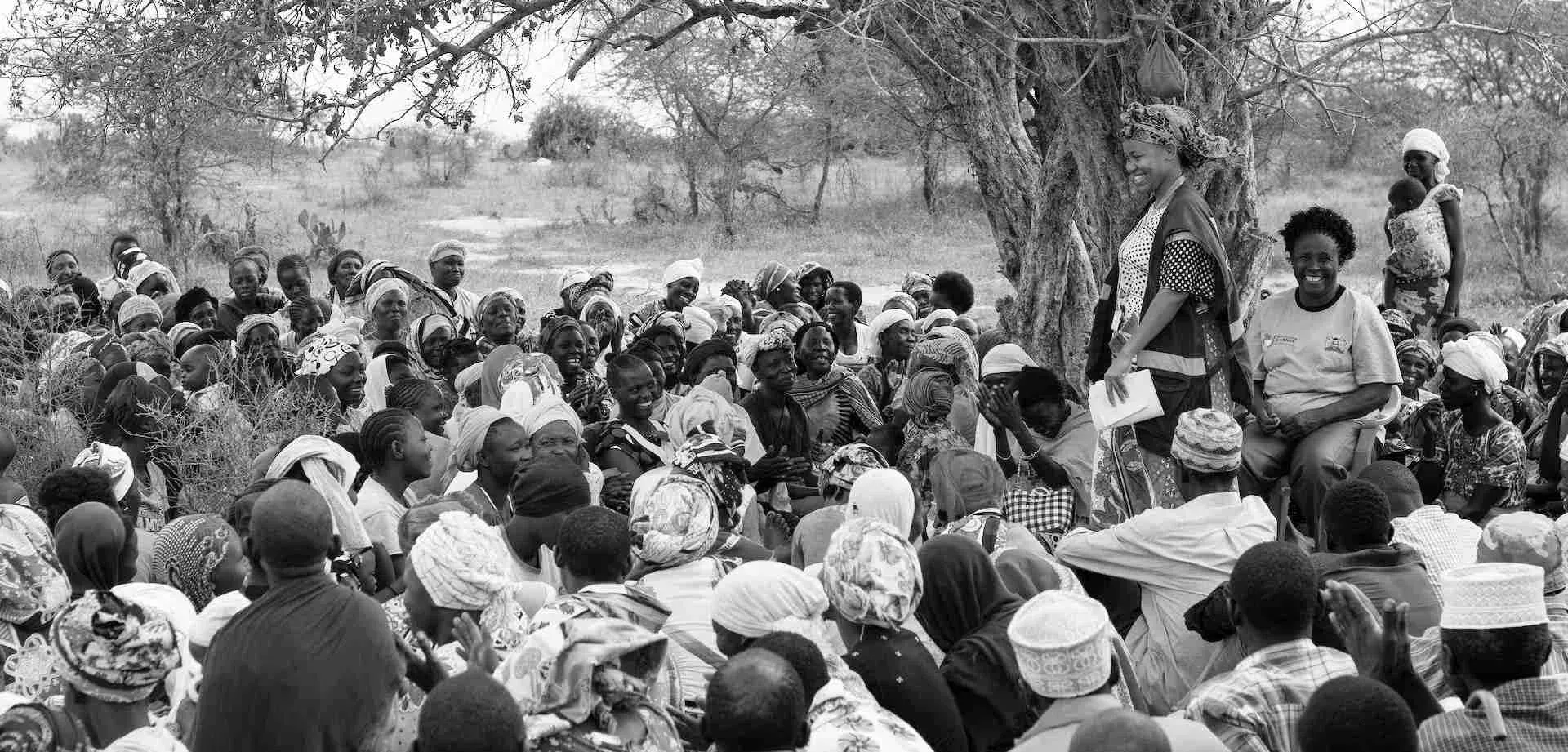
The aim of GiveDirectly is to reach the poorest of the poor. To achieve this, particularly poor regions are first identified using official data. Then local staff introduce the organization and its approach to the communities. Individual households are then visited to explain details, verify the identities of individuals and counteract possible fraud. The process then usually ends with all people living in the region receiving money from GiveDirectly.
How exactly does the money transfer work?
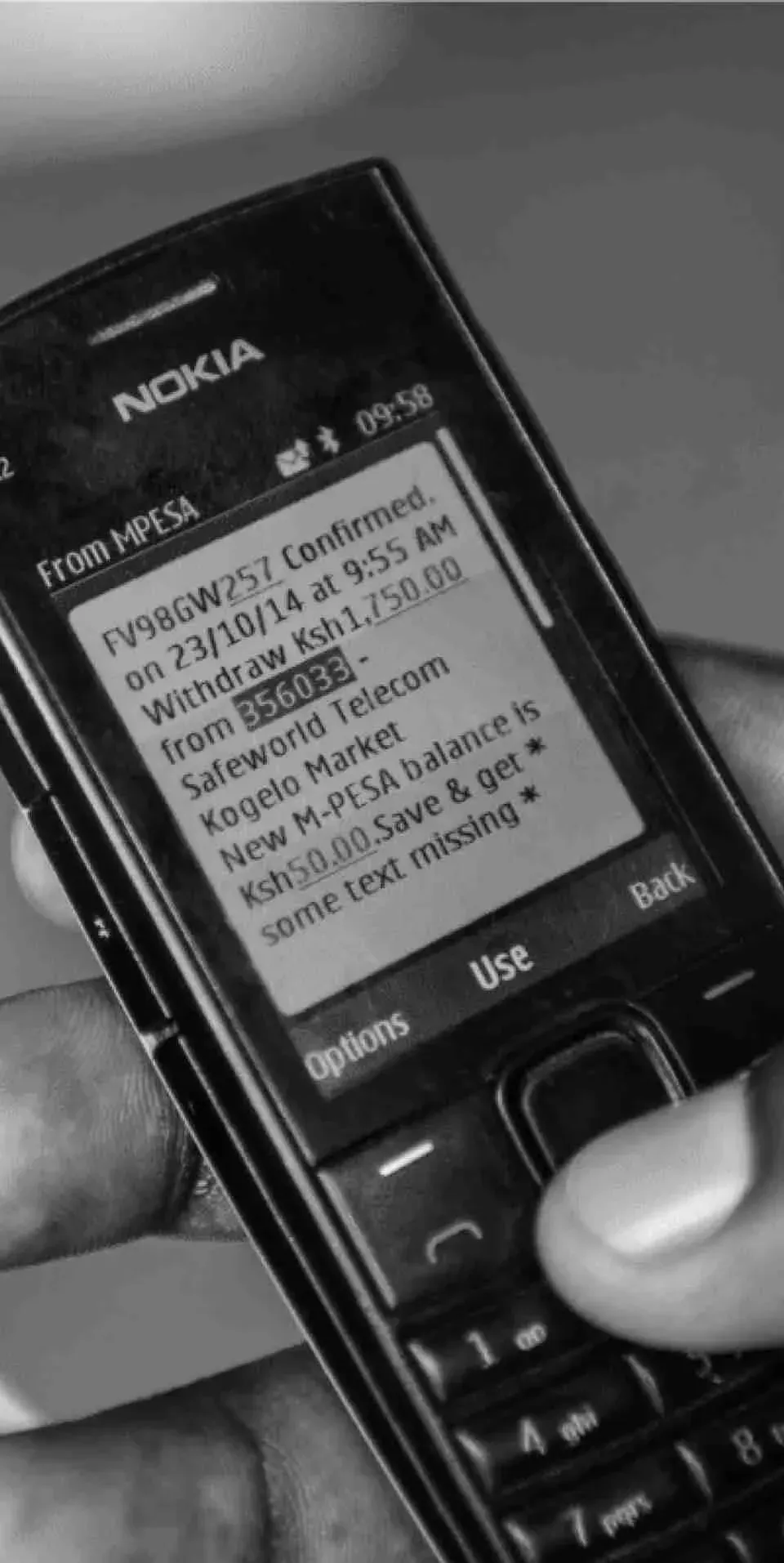
GiveDirectly uses electronic payment service providers for transfers: In Kenya, this is M-Pesa, the mobile money transfer service of Kenya's largest mobile phone operator. In Uganda, the mobile money system of the country's leading telecommunications company is used. Local GiveDirectly employees help people in the program to register with their payment service provider. GiveDirectly then sends the money to the recipient's mobile account. The recipient receives a text message once the amount has been received. The recipient can then exchange their “mobile money” for cash at exchange points. Exchange points are often local retailers and kiosks, but can also be petrol stations, supermarkets, internet cafés or banks.
Do the recipients receive the amount as a lump sum or divided into smaller amounts?
The amount is paid out in several installments. This is the approach favored by the majority of recipients. During the registration process, recipients are informed exactly how much money they will receive and when.
How do the recipients use the money?
Cash transfers allow people to spend the money on the things they need most. An evaluation of GiveDirectly's work from 2013 shows that people used the money to buy livestock, medicines or school books, for example, or invested it in rainproof roofs or saved for larger investments.[11] In the GDLive Newsfeed allows you to track what recipients are doing with their money in real time and without filtering.
How sustainable are cash transfers?
Cash transfers are the clearest expression of the principle of helping people to help themselves. A study of unconditional cash transfers in Mexico found that the incomes of the households studied increased by 1.5 to 2.6 times the amount of the transfer, a clear indication of the long-term impact of cash transfers.[12] What people in extreme poverty lack in order to escape poverty is not specific skills, but money.
What do government representatives think of GiveDirectly?
The prerequisite for GiveDirectly's work is that the relevant state representatives in the regions (mayors, village elders, members of parliament, etc.) endorse GiveDirectly's program. GiveDirectly always works in close coordination with all relevant state institutions.
Is the money paid out to women or men?
GiveDirectly transfers the money to both men and women. A study showed that it made little difference who received the money; both genders handle the money responsibly. GiveDirectly therefore lets households decide for themselves which adult enrolls in the program. So far, just over half of the recipients are women.
Which GiveDirectly programs benefit from donations via effektiv-spenden.org?
GiveDirectly runs several programs to utilize cash transfers in different contexts. The goal is always to support recipients as effectively as possible while at the same time improving their operations and the use of cash transfers in development cooperation overall. In this context, GiveDirectly has also launched programs such as disaster relief for US citizens and support after the earthquake in Turkey and Syria. We have agreed with GiveDirectly that the funds donated through Effektiv Spenden will exclusively benefit programs in developing countries.
Why does GiveWell no longer list GiveDirectly as a “Top Charity”?
In August 2022, GiveWell revised its criteria for selecting "Top Charities." GiveWell emphasized that this change does not reflect a revised assessment of GiveDirectly, which it continues to consider one of the strongest programs it has ever evaluated. (Here is GiveWell's detailed explanation.) Nevertheless, GiveWell still considers the work of its recommended "Top Charities" to be even more impactful, which led to adjustments in its recommendations.
However, GiveWell has recently increased its cost-effectiveness estimate for GiveDirectly's "Cash for Poverty Relief" program by three to four times compared to the previous evaluation.
External evaluations
GiveDirectly in the media
- The good institution. ZDF. 2025
- A revolution in helping Africa's poor: Cash with no strings attached. The Washington Post. 2024.
- How Old Nokias Are Helping Solve Poverty. ColdFusion. 2024.
- We Gave Every Family in a Village a Full Year's Salary. Beast Philanthropy. 2024.
- To End Extreme Poverty, Give Cash - Not Advice. Rory Stewart, TED. 2024.
- GiveDirectly does what it says on the tin. The Economist. 2024.
- Dr. Johannes Haushofer über Armutsforschung. WirklichGut. 2021.
- Das Tausend-Dollar-Projekt. brand eins. 2020.
- Geld zu verschenken. Spiegel Online. 2017.
- Können wir Armut nicht einfach abschaffen? Perspective Daily. 2017.
- Kenia: Grundeinkommen, bedingungslos (Video). ARTE. 2017.
- We Need To Talk About Money. Rory Stewart and Rutger Bregman in episode 7 of the podcast "An Idiot's Guide to Saving the World". April 2023.
- The rise and rise of GiveDirectly. Vox. August 2022.
- Is Cash Better for Poor People Than Conventional Foreign Aid? New York Times. 2018.
- Show Them the Money. Foreign Affairs. 2014.
- Pennies from heaven. The Economist. 2013.
Sources
[1] ↑ The end of progress against extreme poverty? Our World in Data. https://ourworldindata.org/end-progress-extreme-povertyNovember 2025.
[2] ↑ Francisca Bastagli et al. Cash transfers: what does the evidence say? A rigorous review of impacts and the role of design and implementation features. Overseas Development Institute. https://www.odi.org/publications/10505-cash-transfers-what-does-evidence-say-rigorous-review-impacts-and-role-design-and-implementation. July 2016.
[3] ↑ Shannon Doocy and Hannah Tappis. Cash-based approaches in humanitarian emergencies: a systematic review. Campbell Systematic Review. https://onlinelibrary.wiley.com/doi/10.4073/csr.2017.17. December 2017
[4] ↑ David Evans and Anna Popova. Cash Transfers and Temptation Goods. Economic Development and Cultural Change, Vol. 65, No. 2. https://doi.org/10.1086/689575. January 2017.
[5] ↑ Poverty and Shared Prosperity 2022, World Bank. http://www.worldbank.org/en/publication/poverty-and-shared-prosperity. October 2022.
[6] ↑ Unconditional Cash Transfers: Investing Directly in Poor Families. Abdul Latif Jameel Poverty Action Lab (J-PAL). https://www.povertyactionlab.org/scale-ups/unconditional-cash-transfers. October 2018.
[7] ↑ Study: Giving people money returned 2.5x the value without causing inflation. GiveDirectly. https://www.givedirectly.org/multiplier/ October 2025.
[8] ↑ "GiveDirectly is one of the strongest programs that we've found in years of research and we continue to have a very high view of their work." GiveDirectly - November 2020 version. GiveWell. https://www.givewell.org/charities/give-directly/November-2020-version. August 2022.
[9] ↑ GiveDirectly's Cash for Poverty Relief Program. GiveWell. https://www.givewell.org/international/technical/programs/givedirectly-cash-for-poverty-relief-program. October 2025.
[10] ↑ These are currently the Against Malaria Foundation, Helen Keller International, the Malaria Consortium and New Incentives.
[11] ↑ Johannes Haushofer and Jeremy Shapiro. Household Response to Income Changes: Evidence from an Unconditional Cash Transfer Program in Kenya. https://poverty-action.org/household-response-income-changes-evidence-unconditional-cash-transfer-program-kenya. 2013.
[12] ↑ Elisabeth Sadoulet, Alain de Janvry and Benjamin Davis. Cash Transfer Programs with Income Multipliers: PROCAMPO in Mexico. World Development, 29 (6): 1043-1056. https://www.sciencedirect.com/science/article/abs/pii/S0305750X01000183. 2001.