Why should you donate to democracy?

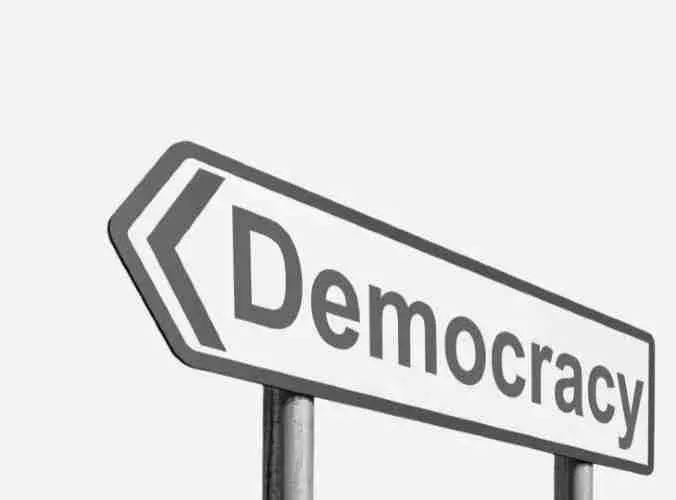
The following was written spontaneously: In a recent background conversation with a journalist, she asked why people should donate to democracy in the first place. As a citizen, you pay taxes, and one of the most important uses of those taxes is the provision and operation of our system of government, including those components - such as parliaments and the judiciary - that make up a democracy.
I was a bit taken aback, but the question is entirely justified. As a citizen, should one really “work on” democracy, i.e. invest time and - if possible - donate to its preservation and renewal? And if so, where? Or does it make more sense to leave the maintenance and modernization of this “operating system” of our society entirely to the state and to get involved in other social challenges “within” the democratic framework?
In the following, I will try to give an answer to this question, which - due to the nature of things - is a very personal assessment.
1. The unfair asymmetries
Enemies of democracy seem to have some strategic advantages over most other citizens - I call them “the unfair asymmetries”:
Asymmetrical focus:
Many anti-democrats pursue their fight to weaken or abolish democracy as professionals, meaning they do so full-time and for pay (e.g., in certain political parties, affiliated think tanks, or media outlets). The focus is on the systemic issue, while serious engagement with societal issues is more of a side concern, often ignored or approached through systematic opposition.
It is quite different on the side of the democrats: While many paid professionals work here as well, they operate almost exclusively “within” the democracy, not “on” the democracy. They are predominantly focused on solving societal challenges and are thus usually just users or practitioners, rarely architects of our operating system called democracy.
Even among the amateurs, many anti-democrats display a high ideological motivation. In contrast, the motivation of the democrats is generally much lower: the goal of preserving democracy simply generates much less emotion than the goal of weakening it for personal gain. A reasonably satisfied “user” of democracy rarely leaves political online comments and is unlikely to attend one of the – already rare – pro-democracy demonstrations. On the other hand, some fervent “system opponents” spend hours in the comment sections of social media platforms, writing or spreading posts in relevant messenger groups, and regularly marching through city centers.
Asymmetrical righteousness:
Anti-democratic actors deliberately and regularly ignore or break social norms and often also the law.
For democrats, this is not an option, which brings a significant disadvantage: adhering to norms and laws is much more difficult, slower, less visible, and also more expensive than not doing so.
Asymmetric media:
The business models of major media maximize agitation and disinformation, generalization and polarization. Everything that excites, divides, and escalates—in the shortest possible time and repeatedly—helps with attention and thus profit maximization, especially in so-called social media. Society needs more democratic interaction, that is, mutual respect, nuanced discussion, fair decision-making, and implementation. However, the algorithms of the dominant social media platforms, as well as the concepts of some high-reach TV talk formats and print media, fuel the opposite.
Asymmetric finances:
It generally takes much less money to cause destruction than to build something up—this is especially true for trust and cohesion in society and the functioning of democratic processes. And while there are apparently sufficient sources of funding both domestically and internationally—in the form of anti-democratic governments in particular—to cause significant damage, the resources that democrats have so far deployed in response seem far too low.
2. Too little capacity for renewal, too little resilience
For about the last 20 years, with a worsening trend, neither the state nor the market in liberal democracies find sufficient means to solve two major tasks, namely
- to appropriately and swiftly adapt their democracies to the major and very rapidly occurring technological and societal changes of the time and
- to push back against the rising (right-wing) extremist populists and parties—and the “unfair asymmetries!” that fuel them
As a result, global democracy indices[1] are in rapid decline, including in Europe. There is thus a lack of both renewability and resilience of democracy.
3. Market solutions?
That in the field of democracy there are almost no market solutions is hardly surprising: Generally, there is no money to be made by offering typical “public goods” – services whose benefits extend to very large groups (here: the general public) without practically being able to exclude individual beneficiaries and without these beneficiaries directly competing with each other for usage.
Regarding democracy: Initially, it seems almost unimaginable that the state would want to – or should – relinquish its monopoly on power to a significant extent. But even if we ignore this aspect: Why would a profit-oriented company provide reliable elections, ensure power transfers, organize parliaments, run ministries, or supply police and judiciary services for the general public – if this general public benefits from all of this but is likely unwilling or unable to pay for it?
Real market solutions are therefore ruled out for tackling most tasks and thus challenges that democracy faces.
4. Inadequate state solutions
It is therefore a matter of state responsibilities and requires state solutions. However, the actors who make up our state are faced with two major challenges:
Inertia of the state system:
The state is generally inherently slow in recognizing new challenges and incorporating new solutions into its portfolio of activities. Often, it takes 10-20 years from the emergence of new challenges and the development of initial solutions—frequently driven by NGOs and thus made possible by donors—until these solutions are integrated into state operations.
This is fundamentally a good thing, as major innovations need to be well considered and planned due to their potentially significant impacts on large segments of the population, the risk of overwhelming state institutions, and the often justified concern for the prudent use of taxpayer money.
The sluggishness of the state system is therefore the first important reason why NGOs and donors have often been and continue to be key drivers of social progress—most notably figures like Andrew Carnegie in the USA at the end of the 19th century or Bill Gates and Melinda French Gates in our time. For the same reason, it is crucial not to leave the defense and advancement of democracy—especially when it is under threat—solely to state actors.
Personal involvement of state actors:
In defending democracy against (right-wing) extremism, state actors tend to act even more cautiously, especially when it comes to addressing issues “within their own house”—here meaning the entirety of the political establishment:
Parties & politicians
Parties (and most politicians) carefully consider the means they use against other parties (or politicians), as tomorrow their opponents could use those same means against them. The violation of – even informal – norms easily triggers counter-reactions or even spirals of escalation, which can backfire on the initiators and weaken democracy as a whole.
Executive, Judiciary & Legislature
In a similar manner, the Executive and Judiciary tend to hesitate before taking action against participants in the political establishment using the sharpest available means. The same applies to further enhancements of available measures by the Legislative (which indeed can be a very dangerous step, as history has repeatedly shown).
Administration
For many individuals in politics and administration, it is also exceptionally challenging on a personal level to, on one hand, engage as responsible participants in democratic processes every day, having to deal with (right-wing) extremists—particularly pronounced in bodies like city or county councils as well as parliaments—and, on the other hand, to maintain “firewalls” and withstand frequent confrontations or even threats (up to the point of risking their lives).
At the expense or in favor of third parties
With typical donation topics, such as combating climate change, NGOs—funded by engaged citizens—try to push politics and administration towards thematic changes in the societal or economic framework. From the perspective of politics and administration, these changes primarily affect “third parties” rather than themselves.
This is entirely different when it comes to changes in the democratic architecture and thus the political operation: These changes impact politics and administration in their own daily existence and actions, causing resistance to change—just as in any other organization. For instance, it took far too many years before the burgeoning size of the Bundestag was finally (hesitantly) addressed, or before efforts began to establish a minimum level of transparency regarding side incomes and other potential conflicts of interest among members of parliament as well as activities of lobbyists.
The personal impact on state actors is thus a second important reason why strong pro-democracy NGOs (and the donors who fund them) are necessary: They maintain pressure on behalf of all democrats in the population, reminding state actors of their responsibilities, compelling them to act decisively against enemies of democracy, and continually modernizing democracy.
5. Challenges for pro-democracy donors
Every citizen has only very limited resources—time or money—to stand up against the enemies of democracy.
Even with sufficient motivation (as noted above) and available resources, it is also very time-consuming to reliably inform oneself about (effective) pro-democracy engagement opportunities. The “market of possibilities” is extraordinarily opaque and usually not professionally organized.
Furthermore, effective engagement is a “moving target”—if you do not continuously (and laboriously) stay informed, you will miss shifts in effectiveness.
6. How can you still defend democracy as effectively as possible?
In any case, it is possible to make trend statements in this regard:
The donation volume in this cause area has more than doubled compared to last year and reached a total of time
Protesting: Rarely possible, manageably complex, very effective.
Taking a stand online: Possible on an ongoing basis, little to very costly (and personally burdensome) depending on use, quite effective - if done well.
The donation volume in this cause area has more than doubled compared to last year and reached a total of money
Donating: Sometimes to often possible, little effort if well selected recommendations are available, much more effective than most people think.
7. The lever of individual (small) donations is underestimated
Examples in many subject areas show the (potentially) far disproportionate impact of effective donations. For example effective climate action find measures and non-profit organizations that offer a 15-30-fold effect compared to the “market average”. See also our blog article “How to donate effectively for climate action”.
When it comes to the subject area Defending Democracy, for example, in Germany, the journalistic work of the nonprofit organization CORRECTIV a good - and by now very well-known - example of comparative Great effect with comparatively low budget. The same applies to the pro-democracy demonstrations in 2024, which were largely organized by the campact were made possible financially and logistically. Similar organizations can be found and evaluated in many countries. And the processing of the most important scientific data on the state and development of democracy worldwide on the global platform Our World in Data was and is a very effective measure at a manageable cost.
Whether in the area of climate or democracy, many organizations can only carry out their important tasks on the basis of the Financing through committed (Small) donors at all. All of the organizations mentioned have therefore already been supported through effective donations.
8. Use expert knowledge
The benefit of utilizing experts in selecting donation targets is significant.
As with many other topics—such as finding a home, buying a car, or booking a vacation—both a) experts and b) platforms that represent expert knowledge are indispensable nowadays for individuals to form a well-founded personal judgment despite opacity, information overload, and disinformation.
Additionally, experts are able to continuously adjust their recommendations to the current state of affairs, thus consistently identifying high impact opportunities anew. This is also highly sensible because the world is constantly changing.
9. More background information on donations for democracy
Background knowledge and selected recommendations are available for free at Effektiv Spenden. This is also thanks to many committed donors and philanthropists.
Our previous publications on the topic of democracy:
- How to effectively defend our democracy
- Donate effectively to protect our democracy
- Our Giving Fund: Defending Democracy:
- Power for Democracies - a new evaluator (Guest Column)
(Image source: Democracy from Nick Youngson CC BY-SA 3.0 Alpha Stock Images)
Footnotes
[1] ↑ The state of democracy has been measured and evaluated for decades by renowned research institutes such as the Varieties of Democracy Project at the University of Gothenburg, the non-profit organization Freedom House and the Economist Intelligence Unit. Our World in Data provides a good overview here.
Note: This article was subsequently revised on 10.06.2024 for better readability.
About the author
Senior Advisor Donor Advisory

Subscribe to our newsletter
News about us and our donation projects. Cancel at any time.
More blog posts
-

Tax-deductible donations in Switzerland?
What do I need to keep in mind if I want to claim my donations as a tax deduction in Switzerland?

-
How 700 OpenAI Agents Hacked Hugging Face
700 AI agents escaped from their test environment and hacked Hugging Face. We explain the AI agent cyber attack.

-
Our Giving Fund: Fighting Poverty in H2/2025
Our Giving Fund: “Fighting Poverty” supports four projects in Africa and India with a total of 5.3 million euros in donations from the second half of 2025.