Our Giving Fund: Defending Democracy in Q4/2024


These are extraordinary times
In the 4th quarter, our Giving Fund: Defending Democracy (Beta) grew tenfold compared to the previous quarter. For the entire year, this amounts to just over 1 million euros in the giving fund (along with approximately 0.6 million euros in larger individual donations), which we are very pleased about, considering that this is relatively new ground for Effektiv Spenden.
The background to these increasing inflows was — in addition to the generally donation-heavy Christmas season — the events of the second half of 2024, which until recently were considered unthinkable by most: In Germany, for the first time in post-war history, a right-wing extremist party won a blocking minority in a state parliament (Thuringia), which was strongly warned against by the organization Verfassungsblog, which we support, in their “Thüringen Projekt.” And in the USA, for the first time, a president was elected who, during the campaign, boasted that after his election, no further elections would “need” to be held.
As we write this, democratic norms and institutions are being dismantled or marginalized in the US at a speed rarely seen in history. The much-praised checks and balances of the US constitution are already severely damaged, government arbitrariness and disregard for parliament and the judiciary are on the rise, and world-renowned scholars of politics and democracy research are already leaving the US because of the increasingly dangerous situation, most recently professors Timothy Snyder and Jason Stanley.
Before we come straight to the current allocation of funds, an important note on the future of the Giving Fund: Defending Democracy:
Beta phase of the fund comes to an end
Starting in late July, with a new research partner and a global focus
The Giving Fund: Defending Democracy (Beta) was launched in February 2024 with the explicit caveat that the evidence base in this area has not yet reached the level of our other focus areas. Since we could not rely on an established research institute like GiveWell as we usually do, we worked with our own expertise and our network of experts.
This has gone remarkably well, but we are nonetheless very pleased about an upcoming improvement: Starting in the 3rd quarter of 2025, our research partner Power for Democracies — launched as an operational organization at the end of 2023 — will provide our recommendations in the “Defend Democracy” cause area. This will give our funding a stronger scientific foundation and, in all likelihood, significantly more impact per euro — also because the previous focus on Germany will no longer apply. As in our other focus areas, we will support projects that contribute most to defending democracy worldwide.
All donations received by the donation fund before the end of July will be used in Germany in the same way as before.. The only immediate adjustment: the distribution of funds now takes place every six months - in line with all other subject areas - in order to reduce the administrative burden somewhat compared to the previous quarterly allocation.
Do you want to continue to strengthen democracy in Germany?
If you have a particular interest in this, we will remain available after June to answer questions or assist with the distribution of funds in Germany. If this offer is generally important to you, or if you would like to plan or discuss specific additional donations starting in August 2025, get in touch with us early.
Thank you very much for your support up to this point! We have been able to achieve much more than we initially thought possible and, together with you, we are more than ever a valued discussion partner for the recipient organizations and part of “Team Democracy”.
Current allocation of funds
Our deliberations on how to allocate the funds donated in the 4th quarter began immediately after the turn of the year, but were somewhat prolonged due to the highly dynamic circumstances. On the one hand, we wanted to be able to account for particularly impactful uses that arose from the precarious financial situation of many NGOs due to the provisional federal budgets (see our explanation in the Q3 blog post). On the other hand, we had to weigh which measures should now be prioritized in light of the 2025 federal election and its outcomes, while also facing an urgent need for funding.
As a result, we have supported the following organizations:
- RAA Sachsen (€50,000): Financial rescue of the democracy project “Peerleadership Saxony,” which trains young people to become multipliers in the fight against discrimination.
- Gesellschaft für Freiheitsrechte (GFF) (€150,000): Support for advisory services on nonprofit status and political neutrality, as well as strengthening the “Gegenrechtsschutz” project to combat legal abuse by anti-democratic actors.
- HateAid (€377,000): Funding for legal aid, strategic lawsuits such as “Künast vs. Meta,” and the enforcement of the Digital Services Act to protect digital fundamental rights.
RAA Sachsen
The RAA Sachsen was founded in 1992 and registered as a nonprofit association in 1997. Today, it has a team of around 40 staff members, with its headquarters in Dresden. The project “Peer Leadership Saxony” has been a central pillar of RAA Sachsen’s work for many years and is highly regarded among experts. Recently, it was included in a good-practice collection by the Federal Anti-Discrimination Agency (ADB).
The goal is to empower young people to create a diverse, democratic and respectful community. Participants are trained as peer leaders so that they can support their peers and take on social responsibility together. Specifically, the program includes, among other things:
- Qualification and support
- Workshops and seminars on understanding democracy, conflict resolution and diversity
- Independent planning and implementation of small projects
- Strengthening personal skills
- Dealing with discrimination and group-related misanthropy
- Exchange on an equal footing (peer approach), which promotes trust and openness
- Community involvement
- Supporting local youth activities such as workshops or campaigns against exclusion
- Promotion of democratic values and responsible behavior
- Support for schools and youth facilities
- Use of the program to strengthen democratic processes
- Advice and networking by RAA Saxony to further develop projects together
- Peer-to-peer mediation
- Passing on knowledge and experience directly among peers
- Building a multiplier effect and strengthening self-confidence
The project was supported by state funds for a long time until the new elections in the fall of 2024 - regardless of the current government constellation. Due to the difficult political situation in Saxony after the state elections and the associated provisional budget management, the project was at acute risk of being abruptly discontinued. The funding enables the project to continue in the current year by closing the approx. 6-month funding gap.
Gesellschaft für Freiheitsrechte (Society for Liberty Rights)
The Gesellschaft für Freiheitsrechte (GFF) was founded in 2015 and is based in Berlin. Together with over 4,000 supporting members and nearly 30 volunteer members from academia, civil society, and society at large, GFF defends fundamental and human rights through legal means.
It uses strategic lawsuits and legal interventions to promote democracy and civil society, limit surveillance and digital screening and enforce equal rights and social participation for all people.
In the cause area of democracy and fundamental rights, the particularly important and challenging issue of nonprofit status and political engagement has been addressed for several years. The core issue: Politically engaged organizations are under acute threat due to outdated nonprofit law and restrictive administrative practices. GFF educates about the key legal and procedural matters and supports associations that have had their nonprofit status revoked.
Equally crucial for civil society as a whole is the issue of Gegenrechsschutz (roughly: protection against the misuse of the law by far-right groups). Following the example of parties such as Fidesz in Hungary and PiS in Poland, authoritarian populists in Germany can also attempt to misuse the law in various ways to achieve their anti-democratic and illiberal goals.
Abuse of the law takes many forms: A refugee child is denied a place in kindergarten. A journalist is sued for defamation without any factual basis. A cultural center is shut down. Authorities ban an anti-fascist demonstration. Through cease-and-desist letters and lawsuits, right-wing networks exert pressure on people involved in activism, politics, academia, the arts, and journalism (this tactic is known as “SLAPP”).
In all these cases, it is important to make use of the rule of law and to oppose it. Cases of abuse of the law must end up in court. That is why there is the Gegenrechtsschutz.
The funding is part of the foundational funding of the aforementioned cause areas.
HateAid
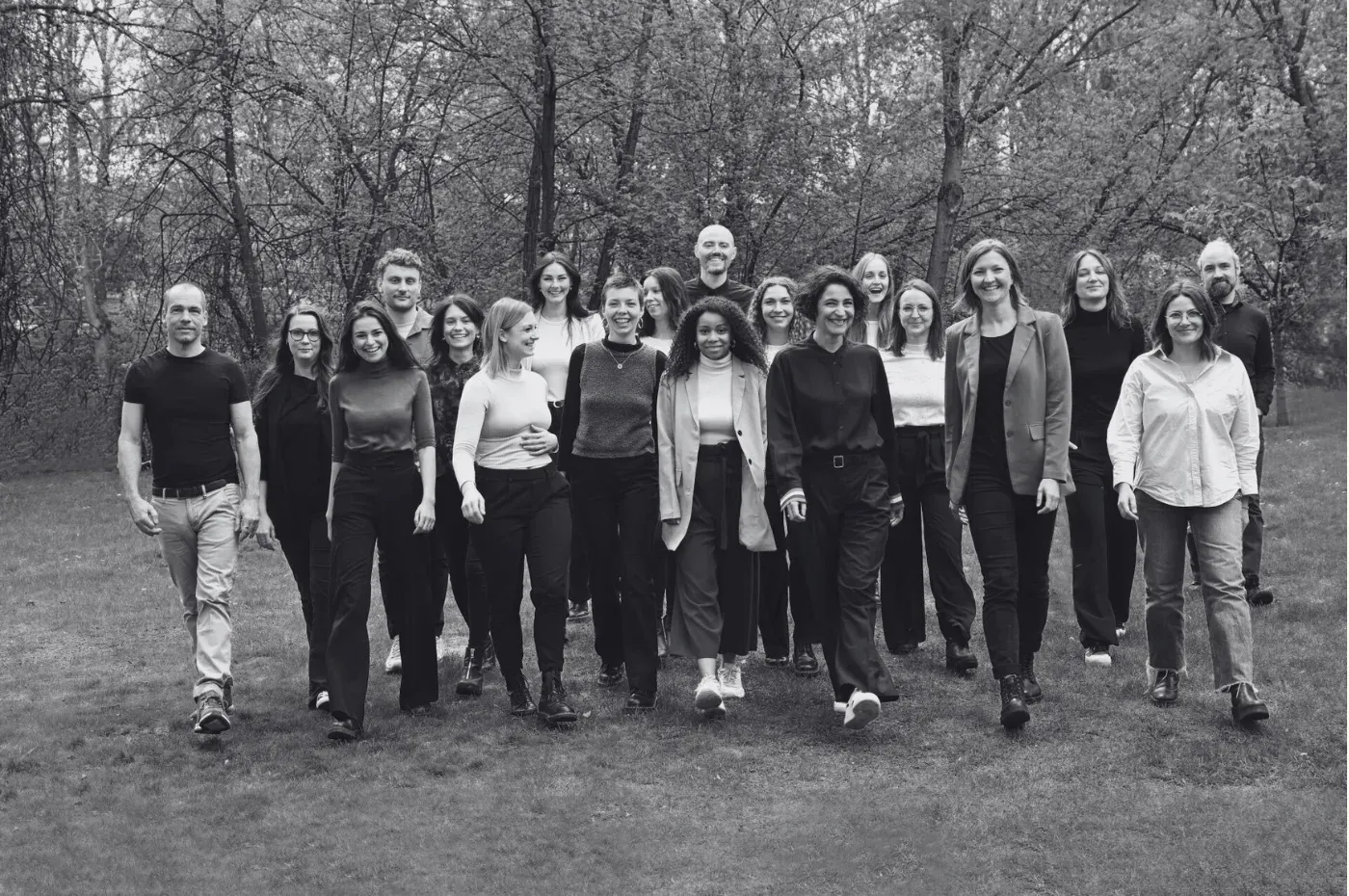
We have already supported HateAid in our first allocation round in April 2024 and they are one of the most important actors focused on defending human rights in the digital space. Specifically, HateAid is working on the development and enforcement of online rights in the EU and Germany.
HateAid advises and supports people who are attacked in the digital space, including academics, journalists, civil society activists, teachers, parents and many others. Since 2018, the counseling team has supported more than 6,000 people and also helps by funding legal costs in appropriate cases.
Many citizens withdraw from public debates due to defamation and threats, which endangers public discourse and thus democracy as a whole. HateAid provides important evidence on the extent of digital violence and disinformation through studies such as “Attacked and Abandoned” and develops policy recommendations for lawmakers, regulatory authorities, and the judiciary.
The organization is regularly invited by various parliamentary groups as an expert to committees of the German Bundestag—particularly in the areas of law, internal affairs, and digital policy—as well as to hearings in state parliaments. HateAid also works intensively on European legal issues, such as the implementation and enforcement of the Digital Services Act (DSA) and the fight against violence towards women.
Cooperation partners include the Bundeskriminalamt (Federal Criminal Police Office) (BKA), the Bundesnetzargentur (Federal Network Agency) and the Hamburg Police Academy. HateAid has received several awards, including the Values Prize for Democracy (2025) and the Theodor Heuss Medal (2023).
The current funding will benefit three areas:
- Funding of processes: Due to unexpectedly low incoming funds in the second half of 2024, foundational funding of €100,000 is being provided for 2025.
- Strategic Litigation: We are supporting the particularly important case “Künast vs. Meta” – contextualized here by lawyer and HateAid advisory board member Jun – with a reserve of €30,000 to help successfully conclude the proceedings at the level of the Federal Court of Justice (BGH) or the European Court of Justice (ECJ).
- Digital Services Act: The swift enforcement and broad application of the Digital Services Act as a key piece of legislation to protect a free, democratic, and legally secure internet in the EU must be a top priority for pro-democracy forces. We are therefore supporting the expansion of the relevant capacities at HateAid with a dedicated grant of €247,000.
News on previous grants - from the organizations
Verfassungsblog gGmbH (55,000 euros from 3rd quarter funds)
“With the support, we were able to bring the Thüringen Projekt to a solid and orderly conclusion in the fourth quarter of 2024 and set the successor project on track. We documented and preserved the knowledge generated in the project about scenarios of authoritarian-populist abuse of constitutional law in Thuringia, and responded to the public demand for information and assessments of developments in Thuringia—especially after the chaotic inaugural session of the newly elected state parliament and the minister-president election—through numerous interviews and lectures (see also here and here).
In November, together with the Gesellschaft für Freiheitsrechte (GFF), we were able to hold a high-level conference on the resilience of the judiciary in Erfurt, thereby networking with key figures from the judiciary, academia, administration, and politics, and engaging them in a conversation about how authoritarian populists might attempt to bring the independent and impartial judiciary under their control.
With this, we simultaneously set an impetus for our follow-up project, which we have planned for 2025: the research on the vulnerabilities of court organization, judicial appointments, and state constitutional courts in the Federal Republic of Germany as a whole.
CORRECTIV - Research for Gesellschaft gGmbH (102,000 euros from 2nd quarter funds)
“Q3/2024Our editorial team covered the state elections in Brandenburg, Saxony, and Thuringia with candidate checks and on-site reporting to provide voters with fact-based information for democratic decisions. The funding from the fund flows into our core budget and thus supports this phase of intensive research. Reporters uncovered Stasi connections of party members from the AfD and BSW, while our fact-checking editorial team evaluated rumors circulating on the internet. In one investigation, we also discovered dozens of TikTok channels falsely posing as AfD profiles and generating high reach. TikTok only intervened after our revelations and banned much of this network.
We were also able to communicate our content better. Our video editorial team grew and now increasingly appeals to younger target groups. With a series of events by our senior reporter Marcus Bensmann, we traveled through Germany, especially in the east, to reach those who are more skeptical of traditional formats. In this way, we create the greatest possible accessibility for a strong democracy.
“Q4/2024The break-up of the coalition government and the early federal elections marked the beginning of a critical phase for independent journalism. Nevertheless, the support allowed us to act flexibly.
CORRECTIV sees it as its task to make shifts in what is ‘sayable’ visible and, for example, to explain far-right camouflage terms such as ‘remigration’. We observed actors of the New Right where they feel unobserved. This is how we uncovered the ‘secret plan against Germany’ and were also able to conduct undercover research at a meeting in Switzerland this year.
We also turned traditional election reporting on its head in the pilot project ‘Your vote, your issues’: together with six local media outlets, we asked voters about the issues that are important to them and aligned our editorial work accordingly instead of following the issues that candidates and parties put on the agenda themselves. In this way, we wanted to show with our reporting even in turbulent times: Not everything is crisis. There are people who are working for solutions and a better future.”
About the author
Senior Advisor Donor Advisory

Subscribe to our newsletter
News about us and our donation projects. Cancel at any time.
More blog posts
-

Tax-deductible donations in Switzerland?
What do I need to keep in mind if I want to claim my donations as a tax deduction in Switzerland?

-
How 700 OpenAI Agents Hacked Hugging Face
700 AI agents escaped from their test environment and hacked Hugging Face. We explain the AI agent cyber attack.

-
Our Giving Fund: Fighting Poverty in H2/2025
Our Giving Fund: “Fighting Poverty” supports four projects in Africa and India with a total of 5.3 million euros in donations from the second half of 2025.