How corporate campaigns effectively reduce animal suffering

A surprising success: caged eggs disappear from supermarket shelves
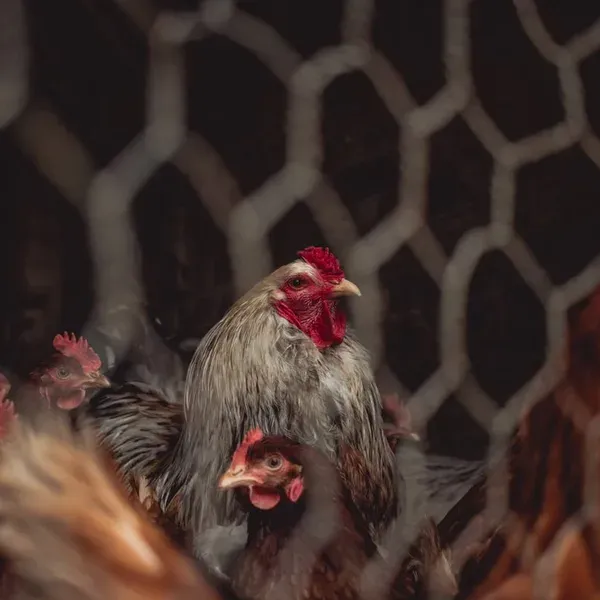
Anyone buying eggs in Germany today will find almost nothing in the supermarket but barn, free-range or organic eggs. Only a few decades ago, a large share of eggs still came from caged hens. The fact that caged eggs have largely vanished from the shelves is considered one of the greatest successes of modern animal welfare: millions of laying hens no longer have to spend their lives in cages. Packed tightly together on wire mesh, they could barely spread their wings – each hen had less space than a sheet of A4 paper.
This change was driven not only by new laws and shifting consumer preferences, but also by targeted campaigns from organisations that pushed companies to adopt higher animal welfare standards. In Germany, the Albert Schweitzer Stiftung für unsere Mitwelt played a central role: together with other organisations, it persuaded supermarket chains and food companies to stop selling caged eggs, and so helped the market for caged eggs in Germany all but disappear.

What are corporate campaigns?
When it comes to reducing animal suffering, many people first think of their own shopping choices. Corporate campaigns start somewhere else: with the companies that control large parts of the food supply.
Instead of convincing millions of individual consumers, animal welfare organisations persuade food companies and large retailers to change their purchasing policies and supply chains. Well-known organisations working this way include The Humane League (North America and Europe, among others) and Sinergia Animal, which runs campaigns in the Global South. The aim is to establish higher animal welfare standards and to change the structures of the system for the long term.
One well-known success story is Starbucks: for a long time, the company would not commit to cage-free eggs worldwide. So organisations in the Open Wing Alliance put pressure on the company in many countries at once: they launched petitions, organised peaceful protests outside its stores and, at the same time, sought direct talks with management. The Open Wing Alliance (OWA) is a global network of more than 80 animal welfare organisations that pools strategies, training materials and experience, and so makes international action much stronger. In the end, Starbucks announced that it would switch to cage-free eggs in its own stores worldwide. Companies such as Carrefour, Aldi and many restaurant chains faced similar pressure.
Why do the campaigns target companies?
There are good reasons why the campaigns target companies rather than individual consumers:
- Great leverage: a single decision by a large food company or supermarket can affect the lives of millions of animals. When a company changes its purchasing standards, this affects not just individual products but often entire supply chains. Commitments by large international companies in particular can trigger change across a whole industry and reach far beyond a single country.
- Structural change: producers often only change their farming systems once their buyers require it. When large retailers or food companies demand higher animal welfare standards, or drop especially problematic products from their range (such as caged eggs), new incentives for better conditions arise along the entire supply chain. Change is anchored at a structural level rather than an individual one.
- Pragmatism: it is often easier to get a handful of companies to change than to influence the habits and buying decisions of millions of people. This means the conditions under which products are offered can be changed directly and at scale.
- Cost-effectiveness: if we want to achieve as much as possible for animals with limited resources, it makes sense to support approaches that can improve conditions for very many animals with comparatively modest means. When a campaign changes the purchasing policy of a large company, millions of animals often benefit from better conditions. That is why many animal charity evaluators consider corporate campaigns particularly promising.
How does a corporate campaign work?
Corporate campaigns are much more than public protest. Successful campaigns usually combine constructive dialogue, public campaigning and continuous monitoring:
- Address the problem with a clear ask: the ask should be measurable and realistic – for example, a company’s commitment to source only cage-free eggs by 2030. Clearly defined goals have a much better chance of success than complex reform packages. A firm deadline and regular progress reports make it possible to follow implementation transparently and hold companies to account.
- Seek dialogue: animal welfare organisations approach companies with reports and data. They point out problems, explain concrete solutions and offer support with implementation. The goal is to get the company to make a public commitment to higher animal welfare standards.
- Build public pressure: if a company does not respond to offers of dialogue and is reluctant to meet the demands, a campaign can go public. This can include coordinated social media actions, petitions, demonstrations or shareholder initiatives. The aim is to increase the pressure on the company and to expose the gap between its public promises on animal welfare and the conditions in its supply chains. In 2025, for example, an Instagram video by the Albert Schweitzer Stiftung reached more than a million views within a few days. The video criticises an Edeka advert. Shortly afterwards, Edeka set itself binding targets for broiler chickens for the first time, in line with the Masthuhn-Initiative (Germany’s counterpart to the European Chicken Commitment), whose criteria include ruling out breeds that suffer from their own fast growth.
- Monitor progress: the work does not end with a company’s commitment. Animal welfare organisations follow implementation and make public which companies keep their promises – and which do not. To do this, they publish progress reports and rankings, such as The Humane League’s “2026 Eggsposé”.
Even though companies are the main target, consumers still play an important indirect role. Campaigns often succeed because companies care about their reputation. When the public demands higher animal welfare standards, companies have a stronger incentive to meet those demands.
The biggest successes
So far, the strongest evidence exists for campaigns to end the caging of laying hens. Both Animal Charity Evaluators (ACE) and Coefficient Giving (formerly Open Philanthropy) rate corporate work as one of the most promising approaches in animal welfare, thanks to its wide reach and cost-effectiveness.
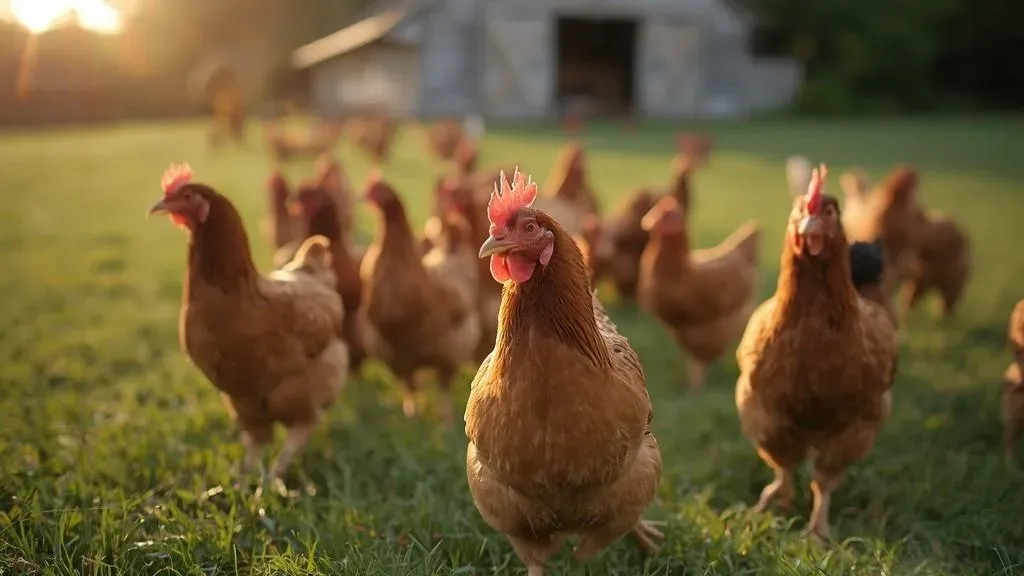
Worldwide, companies have now made more than 2,500 commitments to switch to cage-free eggs. These commitments were driven largely by organisations such as The Humane League and the Open Wing Alliance network. According to the Open Wing Alliance, by July 2025, 92% of all commitments with a deadline up to and including 2024 had been fulfilled. The organisation estimates that this spares hundreds of millions of laying hens a life in cramped wire cages.
It is important to note: this evidence relates mainly to cage-free campaigns in Europe and North America, and it does not automatically carry over to future campaigns – especially those with different asks, in a different area of animal welfare or in a different region.
Still, there are early successes in other areas too: the International Council for Animal Welfare (ICAW), for example, has secured commitments from European retailers that, according to an estimate by the EA Animal Welfare Fund, should improve the welfare of billions of shrimp.
Challenges and context
Challenge 1: The right ask
If it is too small, relatively few animals benefit. If it is too ambitious, the risk grows that companies reject it or fail to follow through on their commitment later. Successful campaigns strike a balance between ambition and feasibility.
Challenge 2: Not every commitment is kept
That is why following up on implementation remains central: animal welfare organisations combine monitoring with targeted cooperation to identify obstacles and develop solutions. So alongside public pressure, support also plays a part in making sure commitments are actually implemented. Sinergia Animal, for example, helps companies by connecting them with suitable suppliers of cage-free eggs.
Challenge 3: Different contexts
Corporate campaigns do not work equally well in every market. Their success depends, among other things, on how sensitive companies are to their reputation and how concentrated a market is. Strategies therefore have to be adapted to local and industry-specific conditions. International networks such as the Open Wing Alliance support this process by pooling experience and helping organisations transfer successful approaches to new contexts.
Challenge 4: Fair rules for everyone
Even when corporate campaigns persuade most supermarkets to adopt better standards, this remains voluntary. Companies that lead the way often bear higher costs than competitors that change nothing, and not every player can be reached through public pressure. For new standards to apply to everyone, legislation is needed. Legislative campaigns use the support of companies that are already on board to win over politicians and anchor standards democratically. This creates a level playing field, and the improvements apply permanently to everyone.
Conclusion
Campaigns aimed at companies show that social change does not always have to start with individual consumer choices. Instead, the rules by which products are traded and marketed can be changed. Around the world, corporate campaigns have already helped ensure that hundreds of millions of laying hens are no longer kept in cramped cages. The successes so far in ending cage farming make this approach one of the best-evidenced and most promising interventions in modern animal welfare. Well-designed asks and consistent monitoring remain essential.
That is why organisations such as Sinergia Animal and The Humane League are among the animal welfare organisations Effektiv Spenden recommends. Through our giving fund “Improving Animal Welfare”, donors with limited resources can reach many animals and reduce their suffering at a structural level.
Sources:
- https://animalcharityevaluators.org/blog/better-for-animals-the-evidence-behind-corporate-outreach-for-welfare-improvements/
- https://coefficientgiving.org/research/a-case-study-on-corporate-campaigns-for-farm-animal-welfare/
- https://faunalytics.org/tactics-in-practice-the-data-behind-corporate-outreach/
- https://www.animalask.org/post/corporate-campaigns-determining-the-scale-of-the-ask
About the author
Volunteer

Get our newsletter
We share tips and news on how you can improve the world effectively.
15,779 people already read it.
The form could not load, probably because of an ad or script blocker. Turn it off for this page or write to us at info@effektiv-spenden.org.
More blog posts
- Future & AI
Making AI safe: What you can actually do
Which organisations work on safe AI, how our «Ensuring Safe AI» giving fund works and why we rely on Longview Philanthropy.
- Democracy
Giving Fund update: Defending Democracy (H1/2026)
The Democrats' win in the US, bright spots in Serbia, Brazil and Venezuela – and where the EUR 425,000 from the first half of 2026 is going.
- Donation tips
The Zewo seal of approval: what it checks and what it doesn’t – a critique
About two thirds of donations in Switzerland go to Zewo-certified charities. What the seal checks, what it doesn’t – and how to find effective organizations.