Disaster relief: A critical review

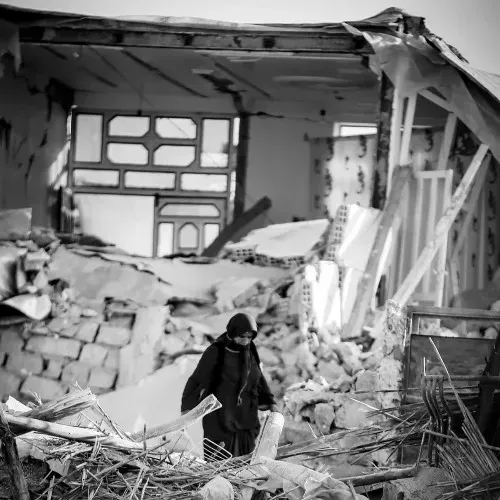
Nothing influences short-term donations more than natural disasters in the media. They can quickly trigger a global outpouring of generosity and lead to billions of dollars in donations.
However, the joy of this generosity can quickly give way to disillusionment when one begins to take a closer look at the cost-effectiveness of disaster relief. All too often, the acute desire to help in a highly political and emotional environment leads to less sensible measures being implemented. In 2006, for example, an over 1,000-page report published by the World Bank came to the conclusion that “Disaster relief is one of the least cost-effective forms of […] activities”. Numerous examples such as this are cited as proof of this statement:
“The window of opportunity to save lives is much smaller than charities admit. Within weeks, if not days, the concern of both the population and the authorities shifts from search and rescue operations […] to restoring infrastructure […] After the 2004 tsunami, victims in Banda Aceh, Indonesia, were eager to return to normality while external emergency medical workers were still arriving in large numbers.”
Rescue operations in connection with the earthquake in Bam (Iran), which killed more than 26,000 people in 2003, are commented on in the same report as follows:
“The international community has spent approximately 10.5 million dollars on the construction of an estimated 10 mobile clinics, which arrived between 2 and 5 days after the quake, long after the last victims had been evacuated to other Iranian provinces […]. In the case of Bam, Iran, the cost of rebuilding all primary and secondary health facilities and educational institutions was estimated by the Iranian government at 10.75 million dollars, an amount very similar to that spent by the international community for the construction of mobile clinics.”
The organization Doctors Without Borders sees a lack of coordination among charities as one of the problems, especially in disasters that receive a particularly high level of media attention. After the earthquake in Haiti in 2010, for example, more than 2,000 organizations were involved in the relief efforts within a very short space of time. Duplication of work and unnecessary competition between the actors was unavoidable. As many were unable to work independently in an unfamiliar country, they were reliant on logistical support from United Nations staff, which further strained their already limited resources.
In this respect, it seems important to support experienced professionals with your donations in the event of a disaster - professionals who speak openly about it if they can no longer use further funds sensibly and who are also prepared to refund the donor’s funds if necessary. Doctors Without Borders, did in 2005 and 2011 for example.
However, if you really want your donation to have the greatest possible impact and help as many people as possible, you should turn your attention to disasters that are neglected by the media. Almost 1,000 infants still die of malaria every day, and over one billion people in the world are infected with worms. These challenges can be countered with proven measures whose high level of effectiveness has been proven by recognized scientific studies and which are extremely cost-effective. Another option is to support people living in extreme poverty, with direct cash transfers. This approach, which is increasingly also used in disaster relief leaves the decision of what is most urgently needed not to international organizations, but to those affected.
About the author
Co-Managing Director

Subscribe to our newsletter
News about us and our donation projects. Cancel at any time.
More blog posts
-

Tax-deductible donations in Switzerland?
What do I need to keep in mind if I want to claim my donations as a tax deduction in Switzerland?

-

How 700 OpenAI Agents Hacked Hugging Face
700 AI agents escaped from their test environment and hacked Hugging Face. We explain the AI agent cyber attack.

-
Our Giving Fund: Fighting Poverty in H2/2025
Our Giving Fund: “Fighting Poverty” supports four projects in Africa and India with a total of 5.3 million euros in donations from the second half of 2025.