Our Giving Fund: Fighting Poverty in H2/2025

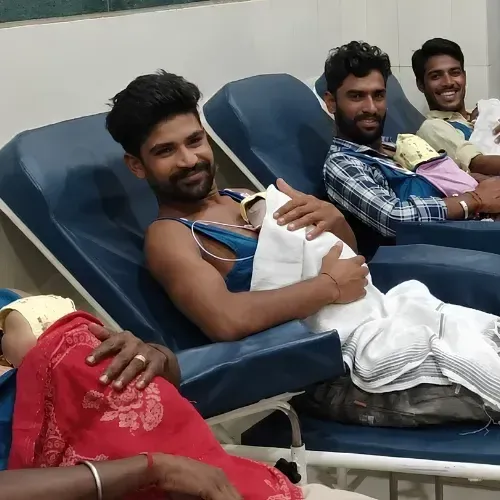
In the second half of 2025, approximately 5.3 million euros were donated to our Giving Fund: “Fighting Poverty”—by 6,424 people from Germany, Switzerland, and Austria. That’s over 50% more than we were able to raise during the same period in 2024.
On the recommendation of the GiveWell All Grants Fund, we have funded four projects—in some cases again as emergency aid to cushion the effects of the dismantling of U.S. development aid:
- Clinton Health Access Initiative (€710,000): Emergency procurement of malaria medication for Malawi – disbursed in October 2025
- Ansh (€1.2 million): Providing care for premature infants in India using the kangaroo method – disbursed in March 2026
- International Rescue Committee (3.19 million euros): Treatment of acute malnutrition in the DR Congo, Niger, and Chad – disbursed in July 2026
- New Incentives, (€210,000): Promoting child immunizations in northern Nigeria – to be disbursed in March 2026
Taken together, and statistically speaking, these grants should keep more than 1,000 children from dying
1. Emergency procurement of malaria medication for Malawi (CHAI – 0.71 million euros)
The challenge
Malaria is one of the greatest health threats in Malawi—and it is treatable. So-called ACTs (artemisinin-based combination therapies) are considered the standard treatment; they are effective and inexpensive. However, this is only possible if they are actually available locally.
This is exactly where an acute problem arose in 2025. Due to the cuts and restructuring of the US development aid, the supply chain stalled. The procurement service provider through which the medications are usually purchased was only able to operate with significantly reduced and delayed funding. The next guaranteed delivery was not scheduled until January 2026, but stocks were only projected to last until November 2025. A regular reorder via sea freight would have taken four to five months and would therefore have arrived far too late.
The solution
The Clinton Health Access Initiative (CHAI) responded with a targeted emergency procurement. Instead of waiting for the delayed regular delivery, around 1.8 million treatment units were ordered directly from the manufacturers, using pre-negotiated terms and ongoing production. The crucial factor was speed. The medications were transported by air freight instead of by ship, reducing the delivery time from several months to just a few weeks.
The uncomplicated funding through Effektiv Spenden played an important role here. Because we had worked with CHAI before, we were able to make the money available especially quickly. This made it possible to build exactly the bridge needed to cover the supply gap until the next regular delivery in early 2026, all coordinated closely with Malawi’s national malaria program.
Background
How is it that malaria has been eradicated in large parts of the world—but not everywhere? Justin Portela from our sister organization, Giving What We Can, offers 27 minutes of fascinating insights into why the disease still exists at all:
2. Care for premature babies in India using the kangaroo care method (Ansh – 1.20 million euros)
The challenge
Globally, almost half of all deaths of children under five occur during the first month of life. Complications due to premature birth are the leading cause of death among newborns. Every year, over 20 million children are born weighing less than 2.5 kilograms, 96% of them in low- and middle-income countries.
The conventional care for these children relies on incubators and radiant warmers. This requires expensive medical equipment, trained staff and stable infrastructure. This is exactly what is lacking in many hospitals in poorer countries.
The solution
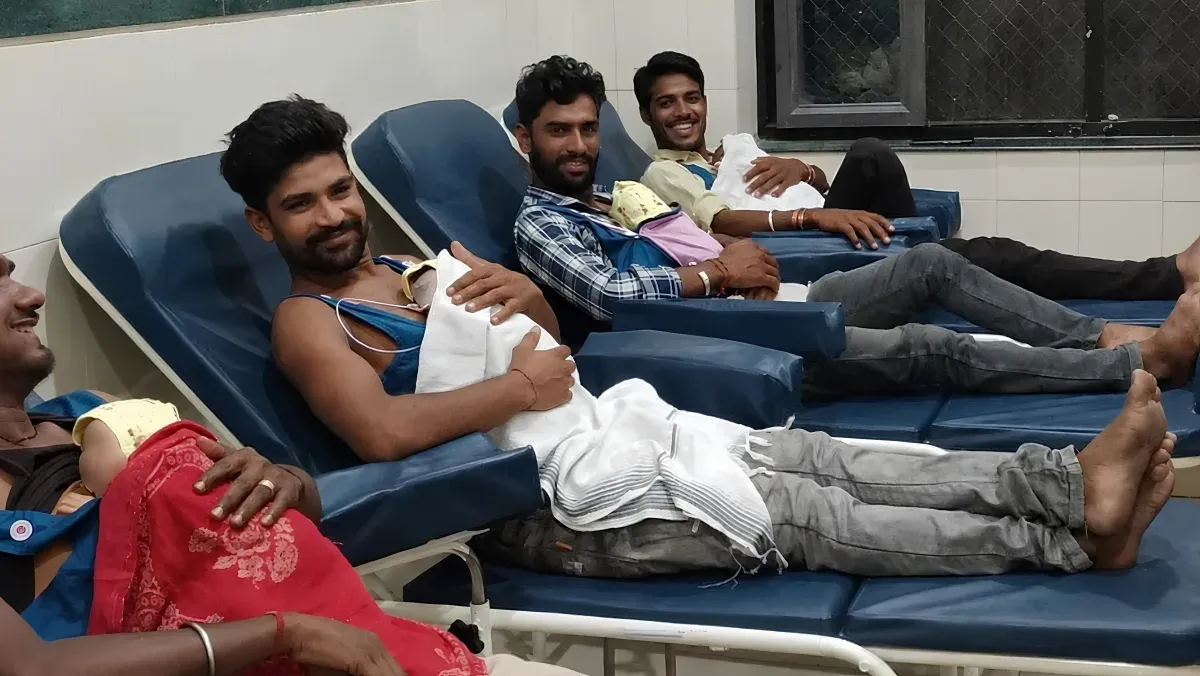
The kangaroo mother care (KMC) method is a proven and cost-effective alternative. Its principle is incredibly simple: the newborn lies directly on the bare skin of a parent for several hours every day. This skin-to-skin contact stabilizes the baby’s body temperature, promotes breastfeeding and strengthens the bond. Studies from low-income countries show that the method reduces the mortality rate in underweight newborns by about 30 % compared to the care that would otherwise be possible in these hospitals, and at a significantly lower cost.
Ansh implements this approach particularly efficiently. Instead of building its own wards or conducting home visits, the non-profit assigns specially trained nurses to existing hospitals. They support parents with skin-to-skin contact, breastfeeding and recognizing warning signs. This is supplemented by basic equipment such as reclining chairs, privacy screens, and measuring devices. Because the model does not require large infrastructure investments, it can be transferred particularly well to other hospitals. GiveWell estimates the cost at around €2,300 per life saved.
Recent Developments
Thanks in part to the support of the funds disbursed via Effektiv Spenden, Ansh has now been able to expand its program from four to 15 hospitals in Rajasthan. In the first quarter of 2026 alone, 4,394 newborns were newly enrolled in the program. The mortality rate among the children cared for was around 7%, compared to an estimated baseline rate of 12 to 20%. That means an estimated 200 children’s lives and more were saved in just three months.
The project is also developing promisingly beyond the numbers. Ansh is currently negotiating an agreement with the government of Rajasthan to secure the programs at the 15 hospitals for a further five years and to expand them to additional clinics. The government has also asked Ansh for support in developing the public hospital systems. At the same time, talks are underway with two other states. What began as a pilot project is thus developing into a model with national potential.
3. Treatment of acute malnutrition in the DR Congo, Niger and Chad (IRC – 3.19 million euros)
The challenge
Acute malnutrition is one of the greatest dangers to young children, and at the same time one of the most treatable. According to GiveWell’s estimates, children with untreated severe acute malnutrition are about seven times more likely to die than children of the same age without malnutrition. The established response is ready-to-use therapeutic food (RUTF), a fortified peanut paste that parents give their child at home over a few weeks, usually alongside antibiotics and regular check-ups at the nearest health center.
The problem is that many of the children affected are never reached. Distances are long, health centers are understaffed, RUTF supplies keep running out, and parents often recognize the warning signs too late. In regions such as Niger, Chad or the east of the DR Congo, conflict, displacement and access restrictions come on top of that. The cuts in US development cooperation have further exacerbated the situation since 2025.
The solution
The International Rescue Committee (IRC) devotes itself to these children, and focuses on strengthening the public health systems that already exist rather than setting up parallel structures. It trains staff in health centers and hospitals, supports them over months and provides supplies and medication.
Two approaches for early detection are particularly effective. The first: parents learn to measure themselves. With a simple colored measuring tape around the upper arm, they can see if their child needs help, often weeks before the malnutrition becomes life-threatening. The second: in villages that cannot be reached by a health center, the IRC ties the treatment to the mobile teams of the Ministry of Health, which come to vaccinate anyway. To ensure that the food does not run out, the IRC builds up its own supplies.
GiveWell has been following the IRC’s work in this region since 2021 and has repeatedly reviewed it since then, including looking at how many children would remain untreated without this support. According to GiveWell’s estimates, the treatment reduces the risk of death from severe acute malnutrition by around 70%.
4. Promoting child immunizations in northern Nigeria (New Incentives – 0.21 million euros)
With the funds from Austria, together with New Incentives, we are facilitating a project to increase child vaccination rates in northern Nigeria. Families receive small financial incentives (“conditional cash transfers”) when they bring their children to the scheduled vaccination appointments. The payments compensate for the costs incurred, plus a small bonus upon completion of the full vaccination series. Read more about this funding from our Austrian entity in a separate blog post.
About the author
Founder & Managing Director

Subscribe to our newsletter
News about us and our donation projects. Cancel at any time.
More blog posts
-

Tax-deductible donations in Switzerland?
What do I need to keep in mind if I want to claim my donations as a tax deduction in Switzerland?

-
How 700 OpenAI Agents Hacked Hugging Face
700 AI agents escaped from their test environment and hacked Hugging Face. We explain the AI agent cyber attack.

-

Philanthropy Consulting in Switzerland: An Overview of Roles and Providers
Asset Structure, Legal Framework, Impact: In larger philanthropic initiatives, various providers assume different roles. An overview of the Swiss consulting landscape.