Climate policy
for conservatives!?


“We finally need climate policy for conservatives, otherwise the next few years could be very bitter.”
Ottmar Edenhofer, chief economist at the Potsdam Institute for Climate Science
Recognizing political realities
The coming decades are crucial for climate protection. But one thing is certain: over such long periods of time, governments will repeatedly come to power around the world that are not passionate about protecting the climate, to put it mildly. Neither in the US nor in Germany will a single party govern permanently. Anyone who believes that climate policy can be implemented with no more than left-of-center majorities is misjudging political reality.
Climate protection must not be a culture war
So if we do not succeed in winning over more conservative politicians for ambitious climate policy, we will almost certainly miss the climate targets. To achieve this, it seems necessary that climate protection is no longer seen as part of a cultural struggle, otherwise we will stand in our own way - and endanger our future.
In my view, a lot of mistakes have been made in the past. Instead of forging the broadest possible coalition, parts of the climate movement unnecessarily linked the fight against the climate crisis with issues that are highly polarizing but have no substantive connection. For example, with cultural appropriation, the Israel-Palestine conflict, or even the abolition of capitalism. This has scared off many people who would otherwise be open to climate protection.
The one-sided role of philanthropy
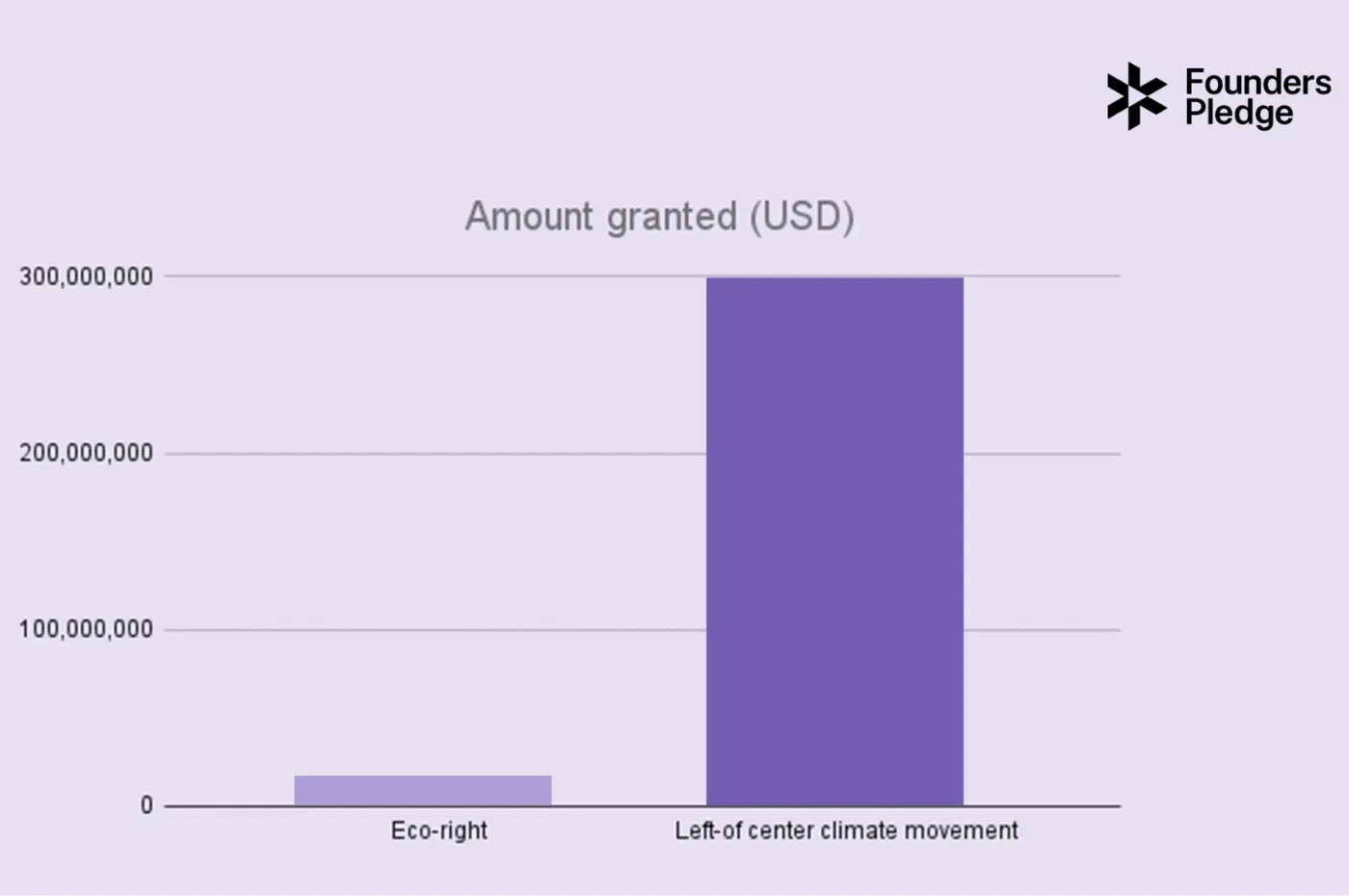
There has also been an imbalance in the funding of climate protection organizations. Researchers from our partner organization Founders Pledge found out that climate protection organizations positioned politically to the left of center received about 30 times as much donation money as conservative initiatives. The latter would certainly find more resonance in the current political climate, but due to a lack of funding, they are less effective.
What form can a sustainable climate policy take?
It is not about softening climate targets or declaring compromises to be an end in themselves. It is crucial to find solutions that have broad political support. A look at practice shows that successful climate protection is also possible with conservative policies.
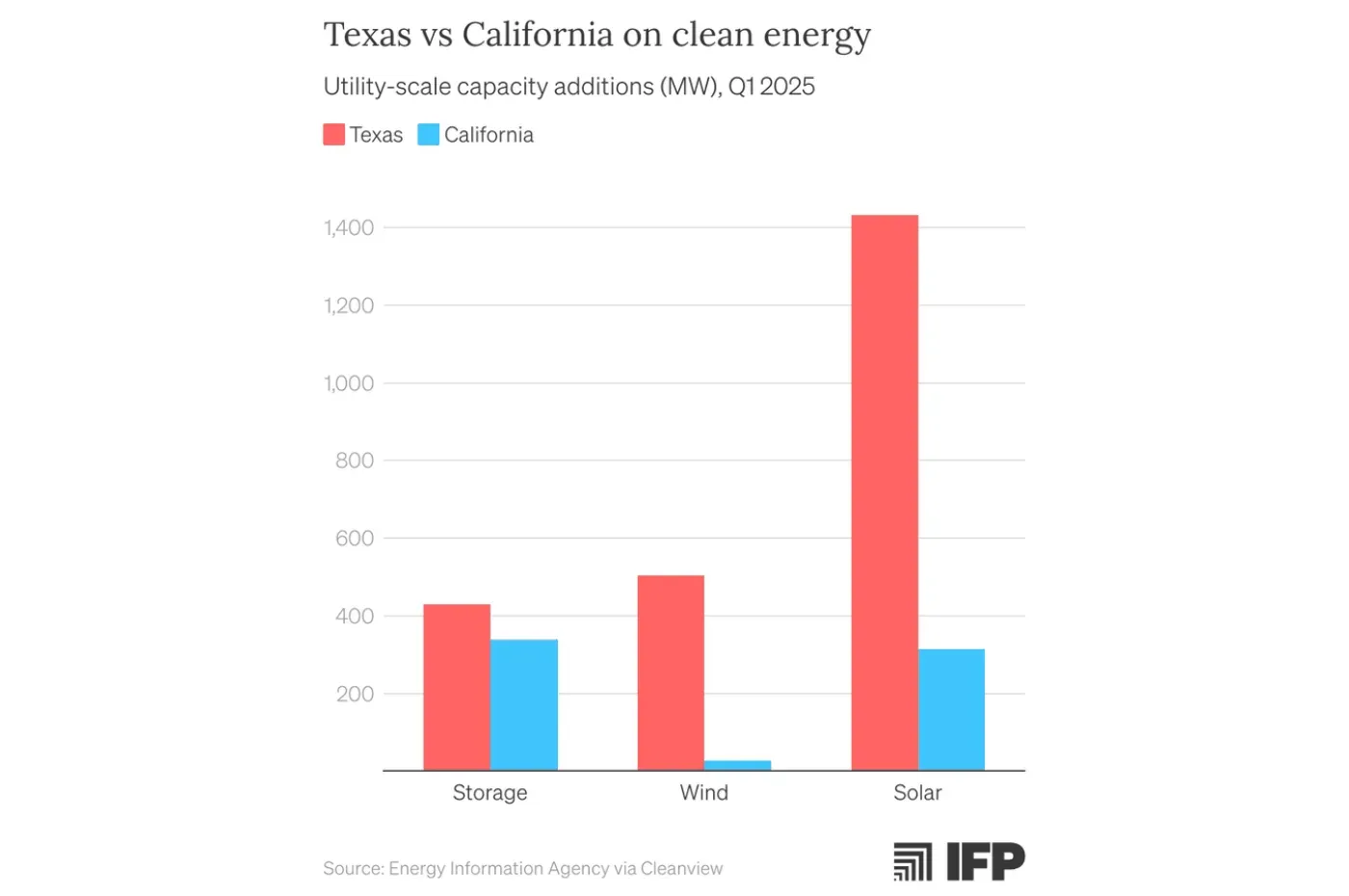
Example Texas: The US state, known for being ultra-conservative, has recently even left the liberal model state of California far behind in their expansion of renewable energies. The reasons for this include, among others, streamlined approval procedures and less bureaucracy – classic conservative principles that are enabling real progress here.
Innovation and taking openness to technology serious instead of bans
Other areas where the climate can benefit from traditionally conservative policies are innovation and a openness to new technologies (done right). To be clear: This is not about sitting back and hoping for a miracle, but about helping necessary new technologies break through by means of political incentives and reducing bureaucracy, as well as not prematurely eliminating solutions that may be unpopular—especially when these can demonstrably lead to a massive reduction in CO₂ emissions (in 2024, greenhouse gas emissions per kilowatt-hour in Germany were nearly 8 times higher than in France, which still uses nuclear power…).
Attractive alternatives instead of agressive moralizing
It has also become clear in the past that the approach, especially popular among progressive forces, of relying on people to change their behavior—or trying to force such changes against massive political resistance—has failed again and again. For passionate idealists, among whom I count myself, this may be difficult to accept. But instead of brandishing a moral cudgel, it does indeed seem far more promising to focus entirely on making environmentally friendly alternatives so attractive that they can succeed in the market.
To achieve this, subsidies are not always necessary. At a event on alternative proteins (aka meat substitutes → livestock farming is responsible for about 15% of global greenhouse gas emissions), startups were asked what their most urgent wish from policymakers was. The answer was not more money, but a reduction of the increasingly unmanageable regulatory hurdles and bureaucracy. It was precisely here that the Trump administration recently delivered a positive surprise, by approving two startups focused on cultivated meat within the first 150 days—exactly as many as during the entire term of President Biden.
No solution without a broad coalitions
No question, I have cherry-picked the examples above, which are by no means representative. The path to a truly broad climate coalition will not be easy. Partly because, in addition to traditionally conservative politicians, there are more and more right-wing populists to convince—who try to stifle any efforts for more climate protection with ideological zeal. But… what is the alternative? Stick your head in the sand, or hope not for a technological miracle but a political one?
No, as challenging as it is, non-partisan solutions seem indispensable. The organization we recommend, DEPLOY/US, puts it succinctly:
“Between 2024 and 2050, America will be governed by fourteen Congresses and at least four presidents. Any strategy based on continued one-party rule has very little chance of success; any strategy that seeks to achieve climate policy progress through partisan politics is too slow. Only bipartisan cooperation can bring about sustainable, ambitious decarbonization led by the US.”
The same view is shared by two more organizations we recommend, Good Food Institute, and the primarily Germany- and Europe-based Future Cleantech Architects. Their board members, Bruce Friedrich and Peter Schniering, recently met in Berlin with Johannes Ackva, head of the climate department at our research partner Founders Pledge, and discussed how to effectively promote climate protection, even in a changing political environment.
The discussion gave me a lot of hope, and I hope it will do the same for you (you can also listen to it here on Spotify).
Your donation can make the difference
If you are convinced by these approaches, you can directly support the work of these organizations or our Giving Fund: Mitigating Climate Change. Even with small amounts, you can make a big contribution to effective, cross-party climate protection.
If you want to support the work of these organizations or our Giving Fund: Mitigating Climate Change, you can do so here with a tax-deductible donation.
If you want to know more or have any questions, you can book a free donation consultation here.
The cover image has been edited; copyright holder is Stephan Röhl. The image is licensed under CC BY-SA 3.0
About the author
Founder & Managing Director

Subscribe to our newsletter
News about us and our donation projects. Cancel at any time.
More blog posts
-

Tax-deductible donations in Switzerland?
What do I need to keep in mind if I want to claim my donations as a tax deduction in Switzerland?

-

How 700 OpenAI Agents Hacked Hugging Face
700 AI agents escaped from their test environment and hacked Hugging Face. We explain the AI agent cyber attack.

-

Our Giving Fund: Fighting Poverty in H2/2025
Our Giving Fund: “Fighting Poverty” supports four projects in Africa and India with a total of 5.3 million euros in donations from the second half of 2025.