Our Giving Fund: Improving Animal Welfare in H1/2026

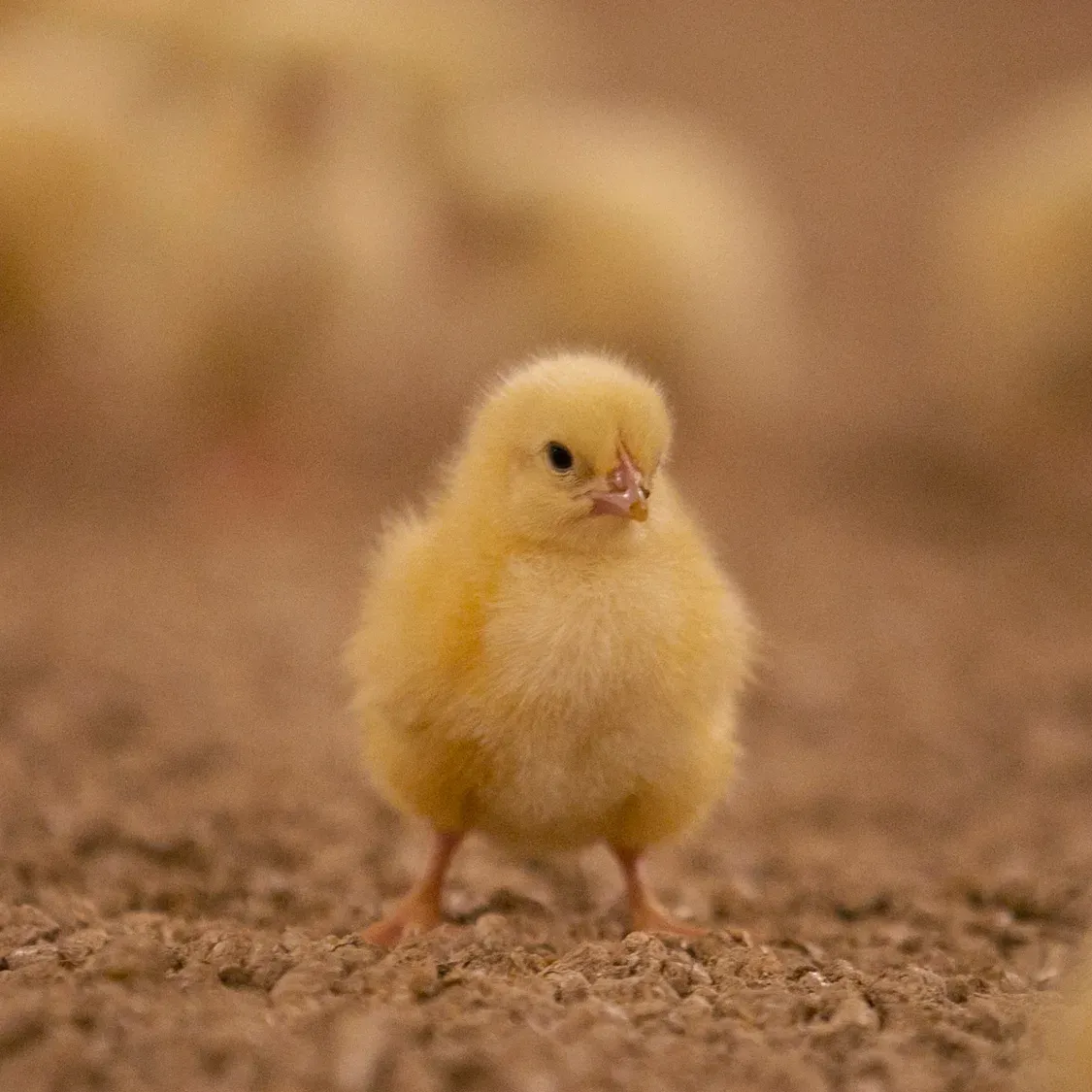
Norway’s entire poultry industry decided together in early 2026 to end both chick culling and overbred “turbo” chicken breeds.
An organization that fought for this for six years is being funded with the donations that came into our Giving Fund: Improving Animal Welfare in the first half of 2026.
Fund Allocation
In the first half of 2026, 1,516 people in Germany and Switzerland gave a total of €490,251.81. As always, the experts at the EA Animal Welfare Fund advised us on where the money would currently do the most good for animals. The grants went to:
- Anima International
- €260,000.00
- AVA International
- €230,251.81
Anima International
Anima International runs public pressure campaigns for factory-farmed animals in countries including Poland, Denmark, Norway, the UK, France and Bulgaria. In Norway, that work paid off in a way no country had seen before.
Anima spent six years there researching, negotiating with the industry and protesting. The team also coined the term “turbokylling” (“turbo chicken”), which even made it into the Norwegian dictionary. In January 2026, the meat industry association KLF and Nortura, Norway’s largest producer, announced that by the end of 2027 they will stop using fast-growing breeds, which suffer because of how they are bred, and end chick culling entirely. The commitment covers virtually all of Norway’s poultry production and reduces the suffering of around 45 million chicks a year. That makes Norway the first country in the world where all major poultry producers have committed to giving up fast-growing breeds. It got there without a new law, after years of pressure from organizations like Anima International.
Our grant funds the next step: Anima wants McDonald’s in Norway to sign on fully to the European Chicken Commitment, which the organization calls its most ambitious goal yet. Chickens in the company’s supply chains would get more room to move, perches, pecking material and more daylight, and would be slaughtered more humanely. If Anima succeeds, it would be McDonald’s first commitment of this kind anywhere in the world, and an important precedent.
AVA International
The second grant goes to infrastructure: Animal & Vegan Advocacy (AVA) International organizes conferences where animal advocates meet, learn from each other and plan campaigns.
In 2025, AVA held summits in the US, Kenya and India, and in 2026 in Ghana, Canada, Germany, Argentina and Thailand. More than 95% of attendees would recommend the summits, and more than 85% came away with strategies that are changing their work (according to AVA’s own surveys).
Our grant specifically funds AVA’s conferences in Asia, Latin America and Africa for two years. Why there? Around 80% of all farmed birds worldwide live in the Global South. Yet the organizations working for them there are far less well funded than their counterparts in Europe and the US.
For 2027, AVA International has planned these summits:
- Johannesburg, South Africa, March 2027
- Mexico City, Mexico, 15–18 April 2027
- Hong Kong SAR, October/November 2027
We thank everyone who gave to the Giving Fund: Improving Animal Welfare in the first half of 2026. Every contribution is enormously valuable, and it reduces the suffering of many chicks.
About the author
Founder & Managing Director

Get our newsletter
We share tips and news on how you can improve the world effectively.
15,800 people already read it.
The form could not load, probably because of an ad or script blocker. Turn it off for this page or write to us at info@effektiv-spenden.org.
More blog posts
- Future & AI
Making AI safe: What you can actually do
Which organisations work on safe AI, how our «Ensuring Safe AI» giving fund works and why we rely on Longview Philanthropy.
- Democracy
Giving Fund update: Defending Democracy (H1/2026)
The Democrats' win in the US, bright spots in Serbia, Brazil and Venezuela – and where the EUR 425,000 from the first half of 2026 is going.
- Donation tips
The Zewo seal of approval: what it checks and what it doesn’t – a critique
About two thirds of donations in Switzerland go to Zewo-certified charities. What the seal checks, what it doesn’t – and how to find effective organizations.