The donation market is broken

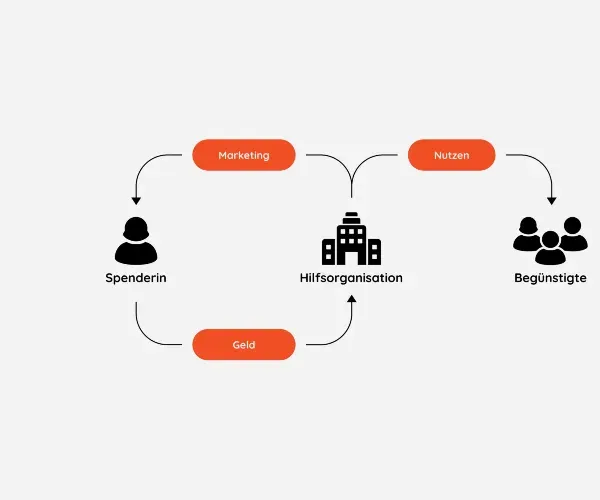
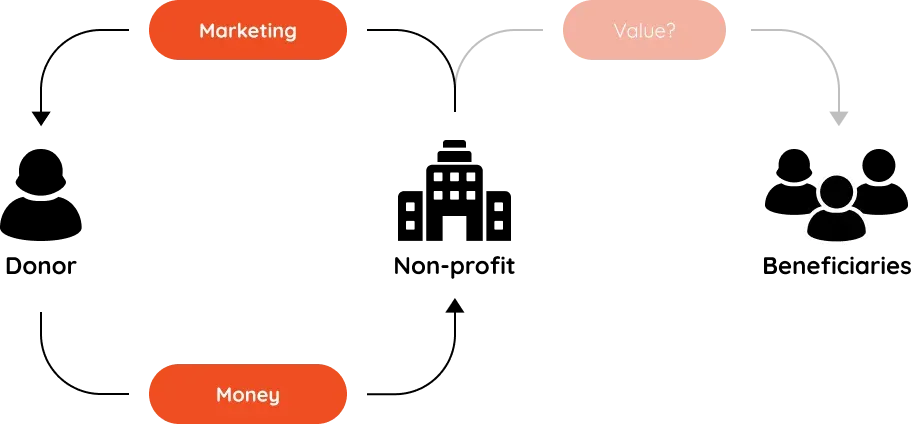
You have to give the market economy credit: The competition on which it is based is responsible for a variety and quality of products and services that has never existed before. This can be explained not least by the fact that the providers of a product or service receive unequivocal feedback from their customers. Whether it’s a pizza, a cell phone or new shoes, if the benefit I receive is not in good proportion to what I pay, the restaurant, manufacturer or brand will be avoided in future and the companies behind it will generate less turnover.

So it can happen that one pizzeria becomes a global company over time, while another has to close down after a short time.
The non-profit sector is very different. Here, organisations can hold their own in the ‘market’, or even grow, even if they make little or no difference to the lives of their target group. The reason is simple: The recipient of the assistance is not the one who pays for it. This is often only used because it is provided free of charge or at least at a greatly reduced price. Of course, this cannot be used as proof that it is the best possible way to improve the life of the person concerned in relation to the costs.
In particularly extreme cases, well-intentioned aid can actually make people’s lives worse. One example of this is the organisation PlayPump International, which attracted a great deal of attention in the 2000s. Its idea is as simple as it is fascinating: in very poor regions of rural Africa, it is common for women in particular to laboriously fetch water from the ground using a hand pump. Water engineer Ronnie Stuiver thought there had to be a better way, so he came up with the idea of using playground carousels to allow children to playfully bring the precious water to the surface.

In everyday life it seems less cheerful. (Photo: mediamolecule / CC)
By integrating a pump, water is pumped into a tank every time the carousel turns. The idea also appealed to marketing expert Trevor Field, who bought the patent to popularise the concept under the name PlayPump. According to his plan, the project would not only provide children in remote areas with additional play opportunities and relieve their parents from strenuous and often time-consuming work, but would also be self-financing through the placement of advertisements. What’s not to love?
After numerous celebrities such as AOL founder Steve Case, rapper Jay-Z and the then First Lady of the United States Laura Bush promoted the project for a while, critical voices were heard for the first time in 2007. Experts had evaluated the project and came to a devastating conclusion: the integrated pump meant that significantly more force had to be applied when playing with a PlayPump than with conventional carousels, which robbed the children of their fun. In one village, this led to the children being paid to “play . In other villages, the women had to turn the carousels themselves, which was seen as exhausting and humiliating. When asked what the inhabitants thought of the PlayPumps, many replied that they would like to have the old hand pumps back. They said that they could pump significantly more water with less effort and that they also required less maintenance. The hope that the PlayPumps would finance themselves through advertising was also dashed. The villages in which the pump carousels were installed were simply too poor to be considered an interesting target group by companies.
If the villagers had had to pay for the PlayPumps themselves, the organization behind them would have quickly disappeared from the market. The costs were disproportionate to the de facto non-existent benefits. However, as it was not the actual recipients but wealthy people from distant countries who provided the funding, it took many years and even more millions before the consequences were drawn from this blatant disproportion. In the absence of real impact analyses and cost-effectiveness studies, the donors - as is often the case in the sector due to a lack of alternatives - had chosen to rely too much on a good story and emotional images.
Emotions are undoubtedly the basis of any decision to help. But if you are really serious, they can only be the first step. Especially when the people you want to help live on the other side of the world. The connections are too complex, the individual circumstances too different, for you to simply rely on “common sense” when deciding how to do the most good with your donation.
Realistically, however, the solution cannot be for everyone to become an expert themselves, examine aid organizations using scientific methods and, after a subsequent comparison, come to a well-founded decision as to where their own money is best spent. During my time in the evaluation department at KfW Entwicklungsbank, I experienced for myself how difficult it is to really objectively assess the success of a project. Even a visit on site is by no means sufficient to form a final opinion, especially if you want to compare the impact of the measure not only in relation to the costs, but also with others.
In this respect, I believe that the best way to make donations is to do what has long been common practice when buying consumer electronics or cars, for example, namely to seek the advice of independent experts.
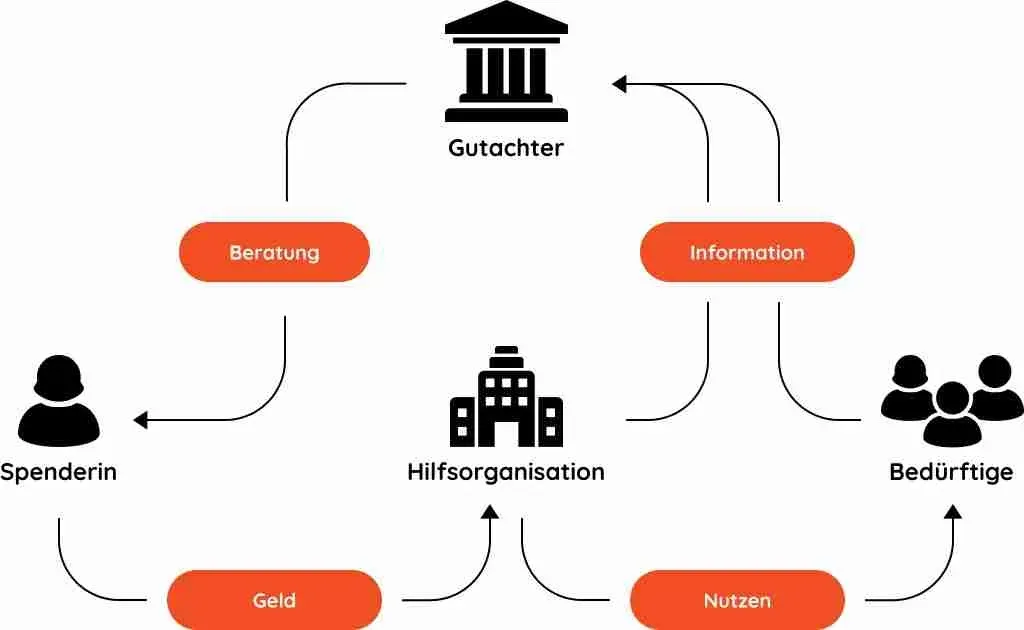
Unfortunately, there is no one in Germany who compares the impact of donation organizations. Internationally, however, things are different. There are now established research institutes such as GiveWell, Founders Pledge. or Animal Charity Evaluators, who invest tens of thousands of hours every year to evaluate aid organizations using scientific methods and make very specific donation recommendations based on the results.
We at effektiv-spenden.org have made it our mission not only to publicize these studies in German-speaking countries and translate the most important results, but also to offer the opportunity to donate directly and tax-privileged to the recommended organizations. It goes without saying that we are completely independent and do not receive any remuneration from these organizations or the research institutions to which we refer.
About the author
Managing Director

Subscribe to our newsletter
News about us and our donation projects. Cancel at any time.
More blog posts
-

Tax-deductible donations in Switzerland?
What do I need to keep in mind if I want to claim my donations as a tax deduction in Switzerland?

-
How 700 OpenAI Agents Hacked Hugging Face
700 AI agents escaped from their test environment and hacked Hugging Face. We explain the AI agent cyber attack.

-
Our Giving Fund: Fighting Poverty in H2/2025
Our Giving Fund: “Fighting Poverty” supports four projects in Africa and India with a total of 5.3 million euros in donations from the second half of 2025.