Child Sponsorship:
Does it make sense to donate?

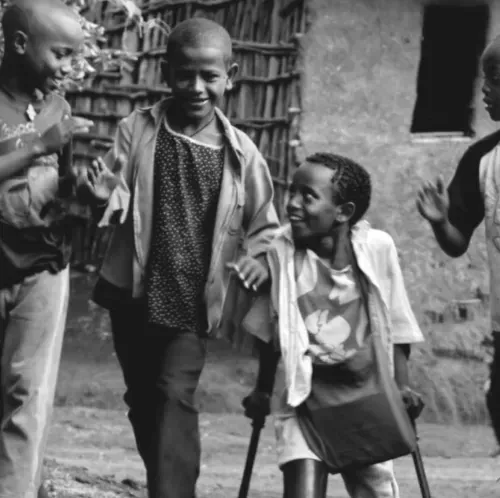
One of the first donations of my life was a child sponsorship. Like millions of other people around the world, I was fascinated by the idea of helping a specific person. So, together with my mother, I decided to use some of my allowance to sponsor little Welderufael Zeru from Eritrea. I was fascinated by the possibility of giving a child growing up in abject poverty a better life.
It’s no different today. But unlike in the past, I now take a very critical view of child sponsorship. At best it is a fraudulent label, at worst a highly ineffective or even counterproductive form of development aid.
The organization terre des hommes agrees and decided as early as 1975 to discontinue these types of sponsorship programs. The main reason for this was because…
- “sponsorship is individual aid that does not address the causes of poverty and development problems,
- sponsorships isolate children and create envy,
- children are placed in foster homes, destroying family and social structures,
- sponsorships involve a lot of administrative work and are therefore expensive.”
This criticism seems understandable and, if you look at the websites of organizations such as the Compassion Foundation, it is reasonable to suspect that it is just as true.
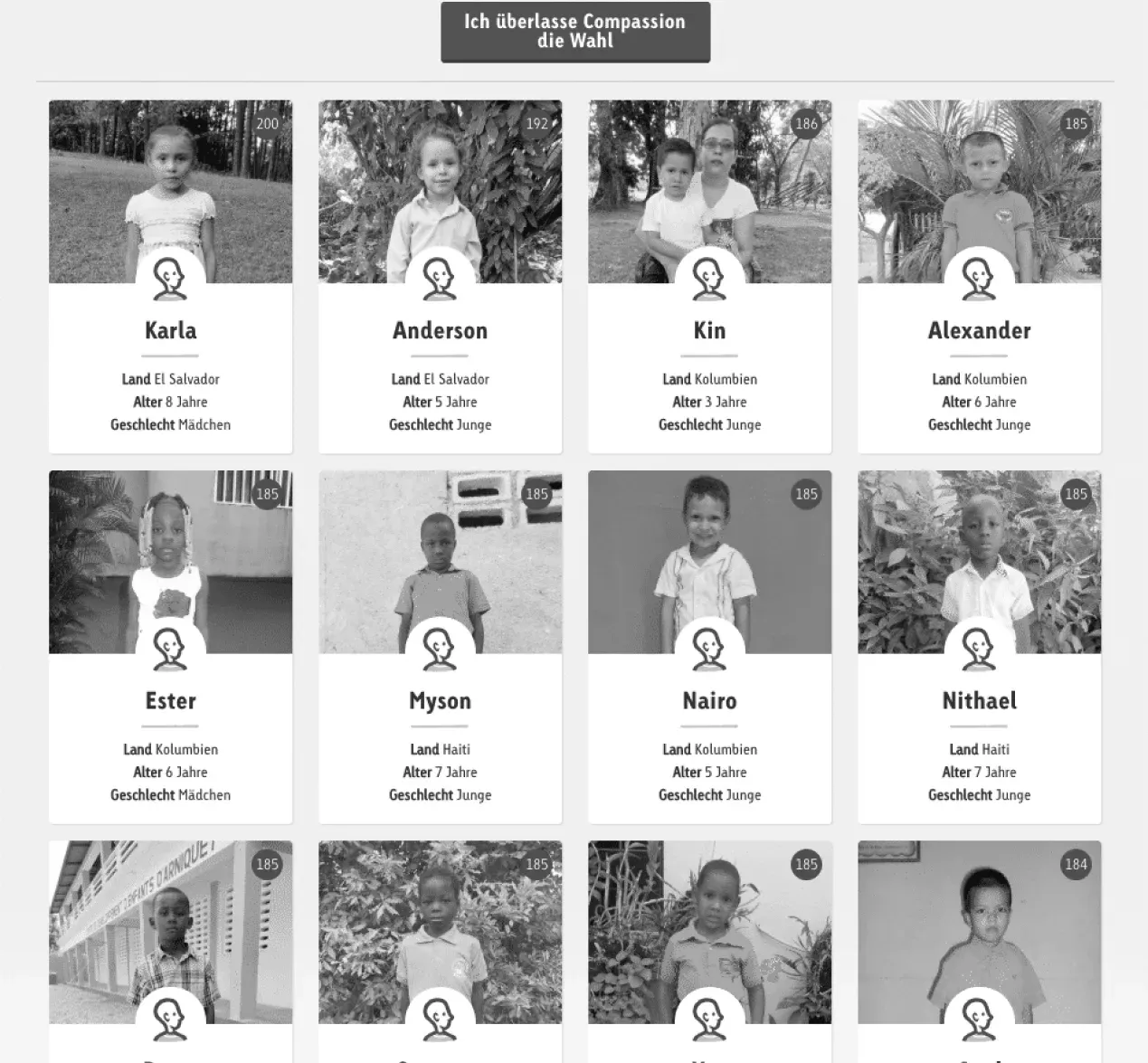
As with Amazon and the like, you can use various filters to sort hundreds of potential godchildren by gender, origin and age. If you still haven’t found your dream child, you can click on the “Show more children” button…
As an additional incentive, each child’s picture is marked with the number of days they have been waiting for a sponsor. Once you have decided on a child, you are greeted with the phrase “With 30 € per month you can lift Karla \[name of child] out of poverty!” and prompted to make a corresponding donation. So it makes sense to believe that your gift will actually and specifically take Karla off the waiting list and that she, and not little Anderson, will receive support. This “catalog-like advertising” was already criticized in 2005 in the study “The public presentation of child sponsorships” from the University of Erlangen in Nuremberg. Nevertheless, it is still used, at least to some extent, by large and well-known charities such as World Vision or Plan International, which also allow potential sponsors to filter children by gender and origin. In this respect, the fears expressed by terre des hommes that this would be a case-by-case aid that would lead to envy and high administrative costs appear to be entirely relevant.
Fortunately, this is not the case. As in virtually all cases of earmarked donations such as child sponsorship, this is an illusion or misleading marketing. As soon as you look at the fine print, it becomes clear that World Vision, for example, does not actually provide individual aid, but rather “project work in the sponsored child’s environment”. Of course, the children in the photos are not only supported when a sponsor is found. They have been benefiting from this project work for a long time. It is not the case that aid workers travel to a village, take pictures of the children there and only return when they have found enough sponsors, which may be months later, or that they only gradually begin to take care of individual children.
However, if organizations that advertise child sponsorships do not actually do anything other than initiatives that offer less potential for misunderstanding in their public image, it is fair to ask how much of an impact your donation really has. We at effektiv-spenden.org are of the opinion that even those charities that arrange sponsorships and ultimately do good project work are not among the most effective. According to the current state of scientific knowledge, there are also measures within the field of development cooperation that are significantly more cost-effective than others. Initiatives that focus on these approaches can therefore deliver more aid for every euro donated. Examples include programs that free school children from worms for less than one euro a year, or protect them from malaria for the entire rainy season with prophylactic medication for less than seven euros. If you support charities, which are active in these areas, with a donation, you can offer significantly more children a chance for the future, and that is what we are all about.
About the author
Co-Managing Director

Subscribe to our newsletter
News about us and our donation projects. Cancel at any time.
More blog posts
-

Tax-deductible donations in Switzerland?
What do I need to keep in mind if I want to claim my donations as a tax deduction in Switzerland?

-
How 700 OpenAI Agents Hacked Hugging Face
700 AI agents escaped from their test environment and hacked Hugging Face. We explain the AI agent cyber attack.

-
Our Giving Fund: Fighting Poverty in H2/2025
Our Giving Fund: “Fighting Poverty” supports four projects in Africa and India with a total of 5.3 million euros in donations from the second half of 2025.