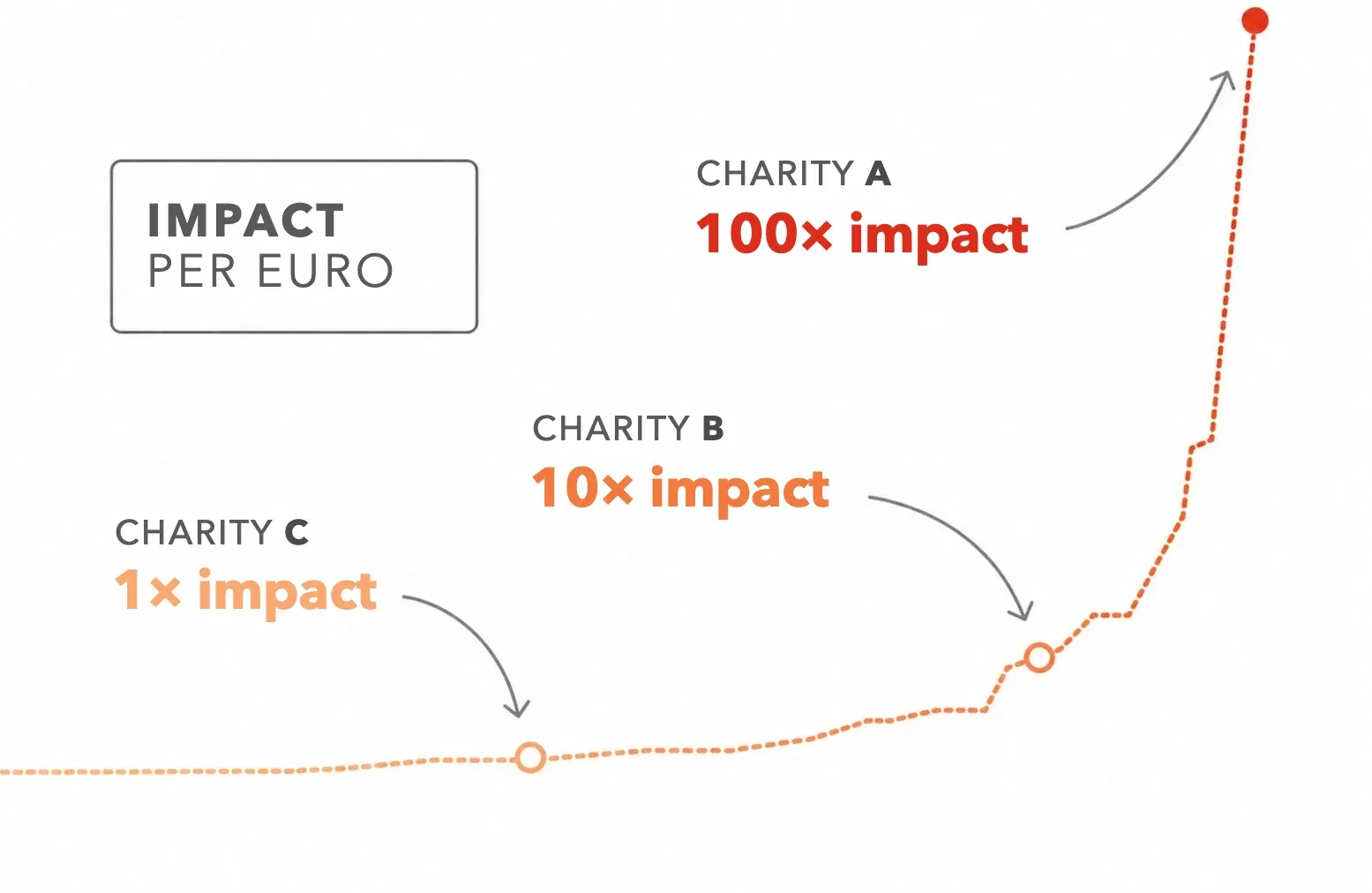
What if your donation could achieve 100 times more?
“100x mehr” (“100x more”) tells the stories of people who set out to find where help achieves the most – and shows how you can use what they learned for your own giving.
For now, the book is available in German only.

“Do you really want to make a difference with your money? Then read this book.”
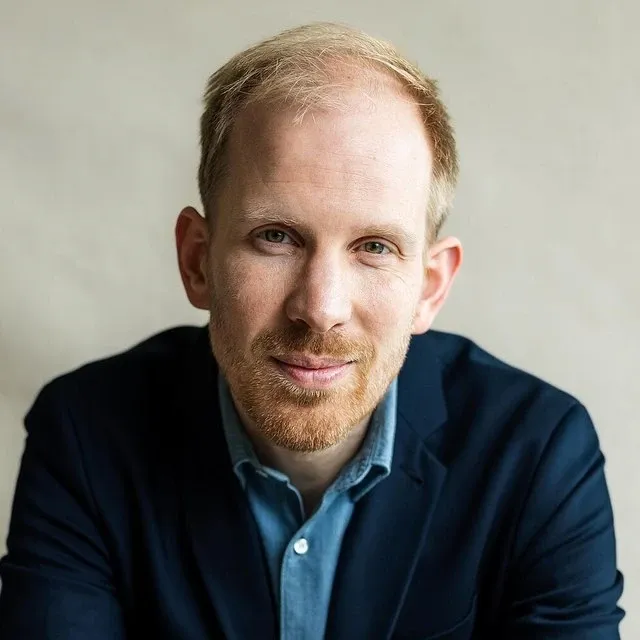 Rutger BregmanHistorian and bestselling author
By carefully applying scientific insights, donations can have an impact a hundred times greater. This is a pivotal turning point for ordinary people who want to make the world a better place.
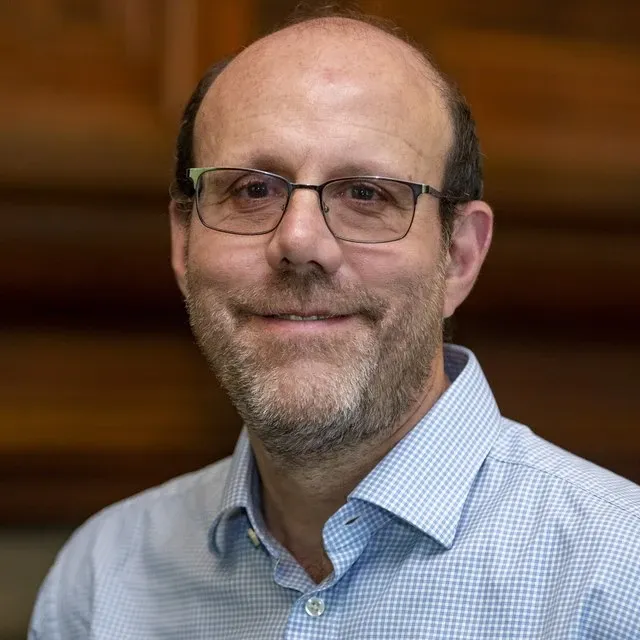 Michael KremerChief Economist of the World Bank and Nobel laureate in economics
What it’s about
Not every donation has the same impact.
Most of us give from the gut – to whichever project moves us at the moment. Yet aid programmes differ enormously in what they achieve with the same euro.
How big these differences are, why the charity market doesn’t even them out by itself – and how to find the most effective organisations: that is what this book is about. Not by wagging a finger, but through stories.
In the book
Meeting people who take impact seriously
Founders, researchers and evaluators – Anne and Basti met them and tell what drives them and what we can learn from them.

Elie Hassenfeld
GiveWellCo-founded GiveWell with Holden Karnofsky in 2007 to find out which aid programmes achieve the most with additional money.
Chapter 17: The art of asking the right question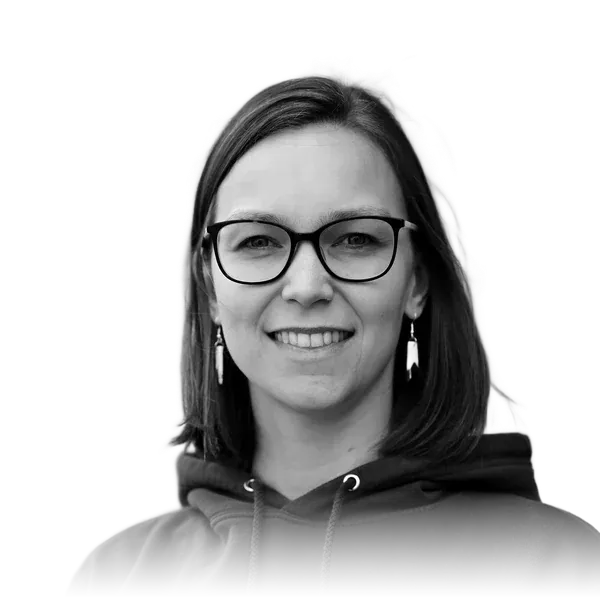
Nina Friedrich
High Impact ProfessionalsThrough High Impact Professionals, helps working people find a role in which they can achieve more.
Chapter 16: The principle of self-reinforcement
Markus N. Beeko
Power for DemocraciesFocuses on democracy as the foundation on which the fight against poverty, climate change and new risks is built.
Chapter 15: The foundation of global well-being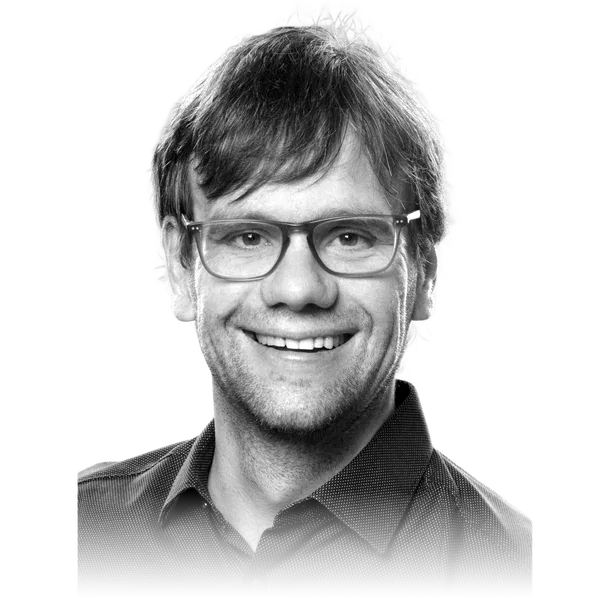
Johannes Ackva
Founders PledgeShows that some of the most effective levers in climate protection systematically receive too little attention and money.
Chapter 14: The will to be controversial
Justus Baumann
Future MattersHas devoted his working life to the gap between research findings and political decisions.
Chapter 13: The shortcut to the top floor
Konrad Gerosa
Simon Institute for Longterm GovernanceCreated neutral ground with the Simon Institute, where he mediates between superpowers on AI safety.
Chapter 12: The attempt to avert international crises
Karl Koch
AI Whistleblower InitiativeExplores whether artificial intelligence is a real danger to humanity – and what we can do about it.
Chapter 11: The most powerful weapon of all time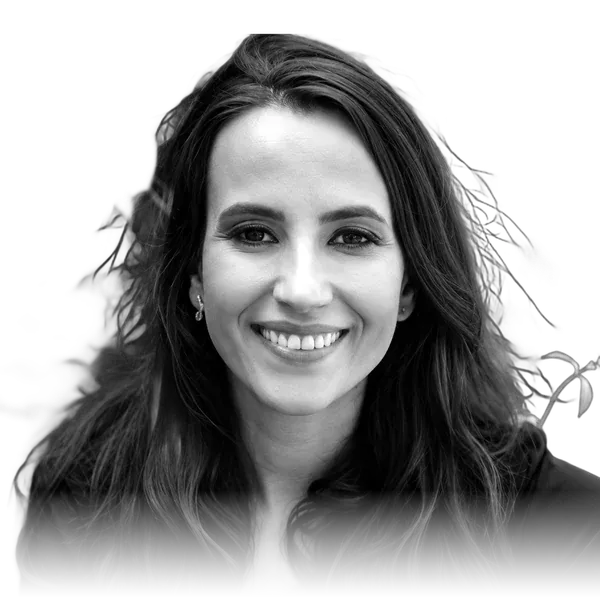
Carolina Galvani
Sinergia AnimalFights animal suffering in factory farming – above all in the Global South, where meat consumption is growing fastest.
Chapter 10: The risk of fighting animal suffering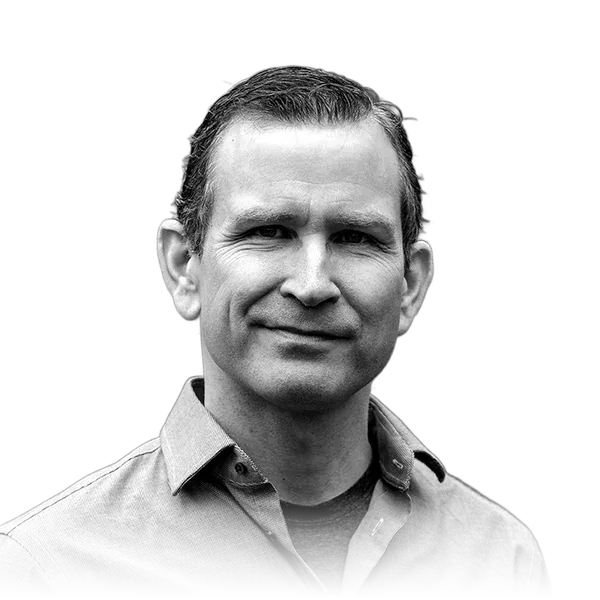
Bruce Friedrich
Good Food InstituteWants to reinvent meat so that one day no animal has to suffer for it.
Chapter 9: The meat of the future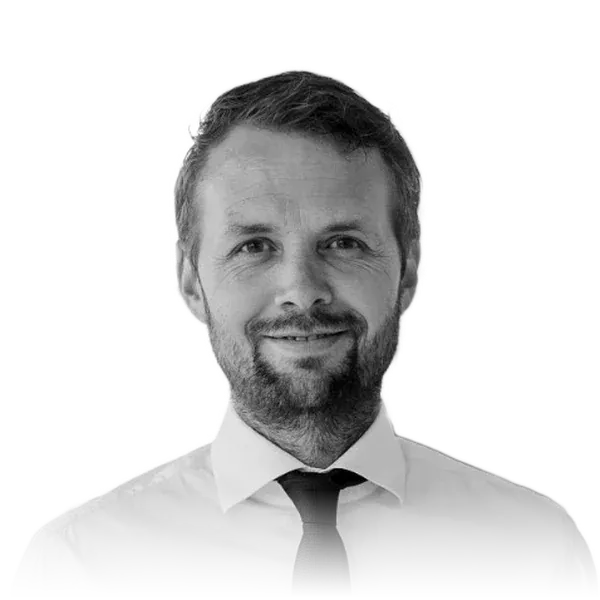
Peter Schniering
Future Cleantech ArchitectsWorks on legislation, funding systems and future technologies, and brings business, politics and science to one table.
Chapter 8: The value of independence
Nils Völker
Healthy FuturesWith Healthy Futures, tackles syphilis – an overlooked disease that kills many newborns every year.
Chapter 6: The drama of invisibility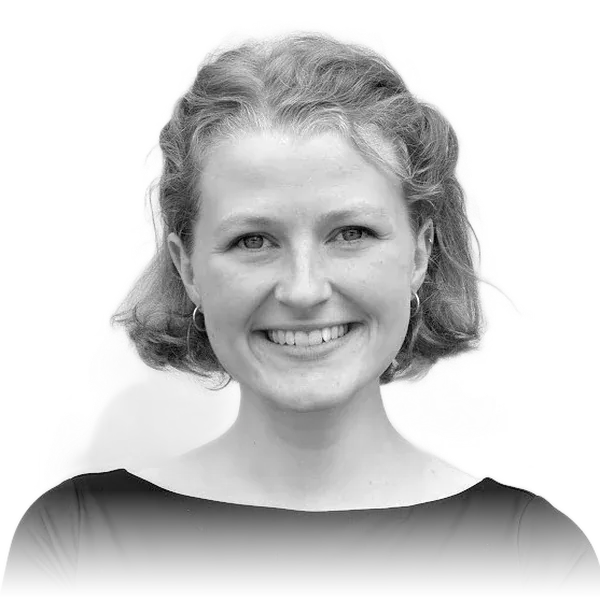
Leonie Falk
Oxygen Access ProjectMakes sure that medical oxygen gets to where it can save lives – often those of the youngest.
Chapter 5: The effectiveness of oxygen
Céline Kamsteeg
LafiyaLeft management consulting and now gives women in Nigeria access to contraception.
Chapter 4: The privilege of being able to plan a family
Daniel Handschuh
Notify HealthSwapped management consulting for Notify Health, which reminds families of their children’s vaccination appointments by text message.
Chapter 3: The text messages that save lives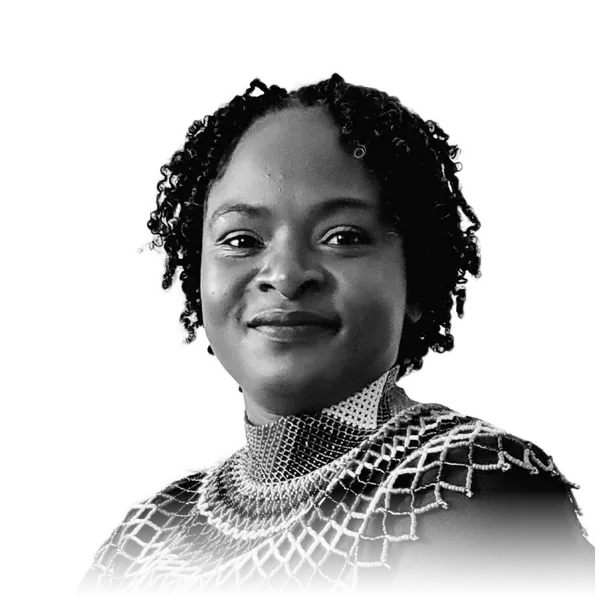
Caroline Teti
GiveDirectlyHas experienced extreme poverty herself and shows what happens when people can decide for themselves how to use money.
Chapter 2: The true meaning of poverty
Michael Kremer
University of ChicagoHelped pioneer testing anti-poverty measures scientifically on a small scale first, then scaling up what works.
Chapter 7: The master plan for fighting povertyPlus compact info boxes to take away:
- What charity seals (DZI, Zewo, OSGS) tell you – and what they don’t
- How GiveWell measures impact
- The ITN framework
- Factory farming & animal welfare
- Why the charity market doesn’t correct itself
Pre-order nowOrder now
Get your copy on publication day.Get your copy.
Pre-order “100x mehr” now and it will be with you on 25 November. Every pre-order helps the book get noticed and reach more people.“100x mehr” is available wherever books are sold – online or at your local bookshop. The book is in German; the shops below are German-language stores that also ship abroad.
 Pre-order – delivered on publication dayOrder online
 Pre-order online or collect in storeOrder online or collect in store
 Pre-order online or collect in storeOrder online or collect in store
 Pre-order – delivered on publication dayOrder online
 Order online – and support a local bookshop
In Austria or Switzerland? Thalia.at · Orell Füssli · Ex Libris
Ideally from the bookshop round the corner
Any bookshop in Germany, Austria and Switzerland can pre-orderorder “100x mehr” for you – just give them the title or ISBN. It will be waiting for you on publication day.

Authors
Anne Schulze & Basti Schwiecker
Anne and Basti founded Effektiv Spenden and run the charity together. For years they have been helping people in Germany, Austria and Switzerland achieve as much as possible with their donations.
More about usFAQs
Is there an English edition?
Not for now: “100x mehr” is published in German only.
When is the book published?
On 25 November 2026. If you pre-order, it will be delivered to you on publication day or be waiting for you at your bookshop.
Why should I pre-order?
Pre-orders show booksellers that there is interest in the topic – and help get “100x mehr” onto bookshop shelves and display tables. It helps us a lot.
What happens to the proceeds?
All royalties go directly and in full to Effektiv Spenden. So with every purchase you make a small contribution to supporting Anne and Basti in their mission.
Press, readings or bulk orders?
For review copies, reading requests or orders for your team, email us at info@effektiv-spenden.org or call us on +49 (0)30 260 355 19.
Photo credits
- Johannes Ackva: PhotoZentrum Tempelhof
- Justus Baumann: Stefan Maria Rother
- Markus N. Beeko: Power for Democracies
- Rutger Bregman: Maartje ter Horst / Wikimedia Commons, CC BY 4.0, cropped
- Leonie Falk: private
- Bruce Friedrich: Good Food Institute
- Nina Friedrich: private
- Carolina Galvani: Sinergia Animal
- Konrad Gerosa: private
- Daniel Handschuh: Notify Health
- Elie Hassenfeld: GiveWell
- Céline Kamsteeg: Sophie Laubert Photography
- Karl Koch: private
- Michael Kremer: Joe Sterbenc
- Peter Schniering: Future Cleantech Architects / Christian Ewald
- Caroline Teti: GiveDirectly
- Nils Völker: private